Services
Driveway drainage.
The part of a driveway nobody asks about at the quote stage and everybody asks about the first time it rains hard.
- Threshold
- 5m² of impermeable surface at the front
- Simplest solution
- A permeable build-up, no application needed
- Never acceptable
- Falling to the highway
- On clay
- Soakaways need designing, not assuming
- Written, itemised quotesExcavation, sub-base, edging and drainage priced separately
- Site survey before pricingNobody prices a driveway properly from a satellite photo
- Compliant surface water drainageBuilt to meet the 2008 permeable-surface rules, not around them
- Local installers onlyCrews working their own patch, not a national call centre
Every driveway is a surface that used to absorb rain and now does not. Where that water goes is a design decision, and in England it has been a planning matter at the front of a house since 2008.
It is also the single most common defect we get called out to. A drive laid without thinking about water either sends it at the house, ponds in the middle, or discharges it onto the public footway.
Since October 2008, laying more than five square metres of impermeable surface between the front of a house and the highway needs planning permission, unless the water is directed to a permeable area or a soakaway within the property. Most people avoid the application entirely by building permeably. Note the important detail: it is not enough for the surface to be porous if the water has nowhere to go once it is through.
The options
Which one is right depends on the ground, the levels and the area of the drive.
- Permeable build-up
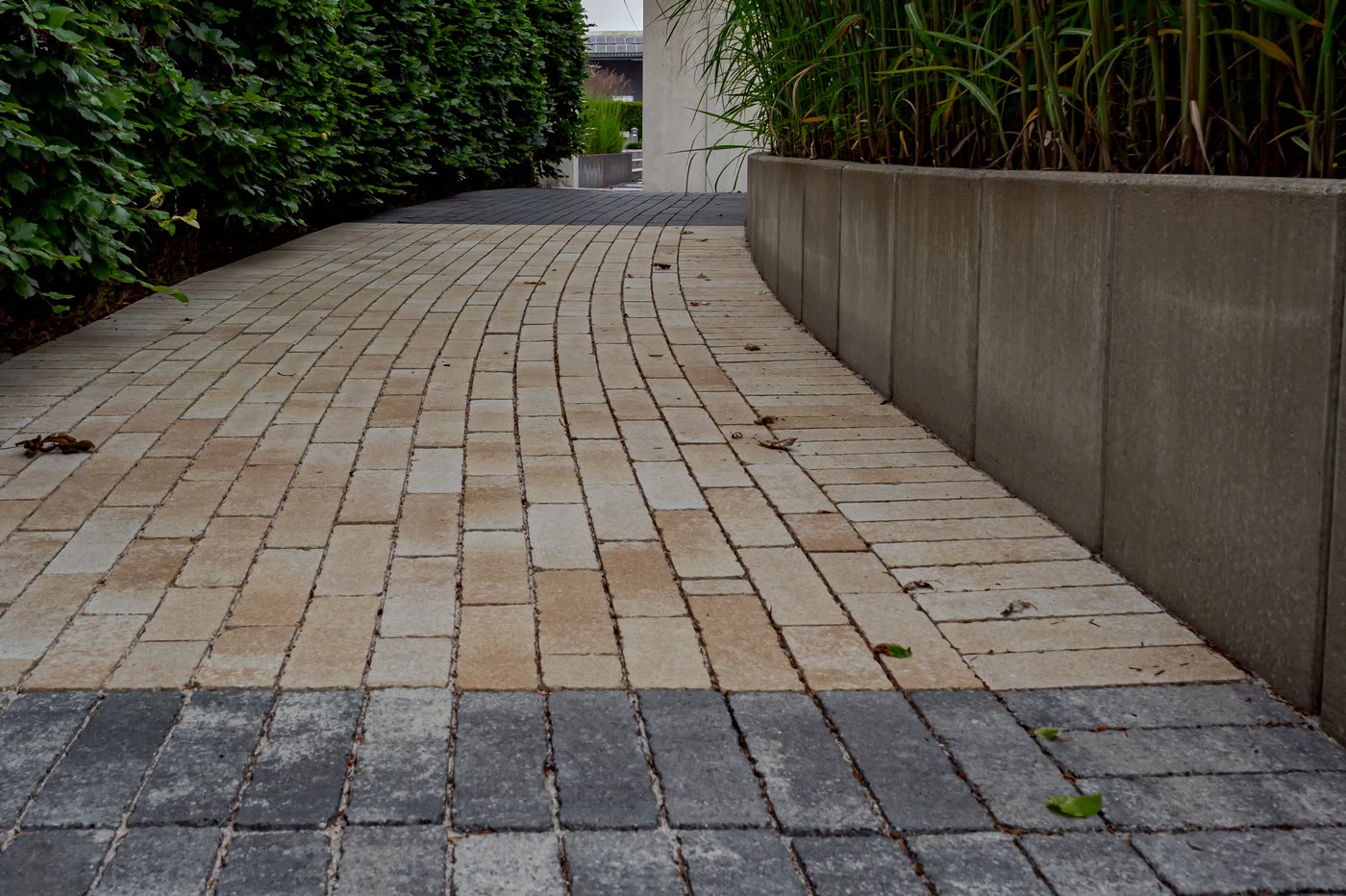
The whole structure takes water down through it, permeable block paving or resin bound over an open-graded stone sub-base with storage capacity. No collection, no pipework, no application. The cleanest answer where the ground permits it.
- Soakaway
A stone-filled or crated pit that collects water and lets it disperse into the ground. It must be sized for the area it serves and located an appropriate distance from the building. On free-draining ground such as chalk or sand it works well; on clay it needs designing carefully and may need an overflow.
- Channel drain (ACO)
A slotted channel across the threshold, catching water before it reaches a garage or the house and taking it to a soakaway or an appropriate outfall. Essential where a drive falls towards a building.
- Permeable margin
A gravel or planted strip along the low edge that takes run-off from a conventional surface. Simple, cheap, and often enough on a small frontage.
- Connection to a surface water sewer
Sometimes the only option on a tight urban plot. It needs permission from the sewerage undertaker, this is not something to connect into on the assumption that nobody will notice.
Clay ground and the word permeable
On clay, a permeable surface on its own is not a drainage solution. Water passes through the surface, reaches clay that will not accept it at any useful rate, and sits in the sub-base.
A permeable build-up on clay therefore has to include an attenuation layer, an open-graded stone sub-base deep enough to hold the volume from a design storm and release it slowly, sometimes with a controlled outlet. That is a real cost and it belongs as an itemised line on the quote, because it is one of the biggest single reasons two quotes for the same drive differ.
Why run-off onto the pavement matters
It is a planning breach, and enforcement is possible. More practically, it puts your rainwater on a public footway, where in winter it freezes, and into a highway drainage system that was not sized for it.
It is also completely avoidable. On almost every plot there is a workable answer, and the cost of getting it right at the build stage is a fraction of the cost of retrofitting drainage into a finished driveway.
FAQ
Common questions.
Do I need planning permission for a new driveway?
Not if the surface is permeable, or if the run-off is directed to a soakaway or planted area within your own property. You do need it for more than five square metres of impermeable surface at the front draining onto the highway. Building permeably is usually simpler and cheaper than applying.
Do soakaways work in clay?
Less well, and they need designing rather than assuming. Clay accepts water slowly, so a soakaway has to store the volume and release it over time, and may need an overflow. On chalk or sand a soakaway is straightforward and effective.
Water runs off my driveway onto the pavement, is that a problem?
Yes, on two counts. It is likely a planning breach if the drive is impermeable and was laid after 2008, and it creates an icing hazard on a public footway in winter. It is usually fixable by adding a channel drain and a soakaway, or a permeable margin at the low edge.
My driveway floods where it meets the garage, what fixes it?
A channel drain across the threshold, connected to a soakaway or an appropriate outfall, and where possible re-setting the falls so the drive sheds water away from the building rather than towards it. The channel is the reliable fix; the falls are the ideal one.
What are the drainage rules for a new driveway?
Anything over five square metres of impermeable surface at the front of a house must not drain onto the highway. You either use a permeable surface, or direct the water to a soakaway or planted area within your own boundary. Both are fine, and both cost roughly the same if designed in from the start.
What is a soakaway and do I need one?
A gravel-filled pit that lets water disperse into the ground. You need one if the surface is impermeable and there is nowhere else within your boundary for the water to go. Sizing depends on the area drained and how freely the ground takes water, which is why clay ground changes the answer.
Can I just add a channel drain?
Only if it goes somewhere legitimate. A channel drain that discharges onto the pavement has moved the problem rather than solved it, and it is the version of this that fails an inspection.
Related pages
Written and reviewed by the PaveLocal team. We build and specify driveways across Northamptonshire, Buckinghamshire and Bedfordshire. Pricing and specification guidance on this page reflects what these jobs cost and involve in this region, not a national average.
Free quote
Get a free quote.
Send your postcode and a rough size and we will arrange a survey. A photo of what is there now tells us more than a paragraph does.
- Itemised, in writingExcavation, sub-base depth, edging, drainage and surface priced as separate lines, so you can compare quotes properly.
- Surveyed before it is pricedGround conditions decide the cost of a driveway. Anyone quoting a firm price off a photo is guessing.
- No obligationA quote is a quote. If you use someone else, that is fine, we will not chase you about it.
Prefer to talk it through? Call 07423 123796, message us on WhatsApp or email info@pavelocal.co.uk.