The complete guide
Driveways.
Six surfaces, one build-up that decides whether any of them last, and a cost range for each. This is the page to read before you get quotes.
- Typical build
- Excavate, membrane, sub-base, edging, surface
- Sub-base on clay
- 200mm+ compacted, in layers
- Typical duration
- 3–5 working days for two cars
- Planning
- Permeable build-up avoids it in most cases
- Written, itemised quotesExcavation, sub-base, edging and drainage priced separately
- Site survey before pricingNobody prices a driveway properly from a satellite photo
- Compliant surface water drainageBuilt to meet the 2008 permeable-surface rules, not around them
- Local installers onlyCrews working their own patch, not a national call centre
Almost every driveway that fails does so for the same reason, and it is never the surface. It is what is underneath: too shallow a dig, not enough stone, stone that was not compacted in layers, no membrane between the sub-base and soft ground, or no proper restraint at the edges.
That is worth knowing before you compare quotes, because the parts that decide whether a drive lasts twenty years are exactly the parts you cannot see once it is finished, and therefore exactly the parts a cheap quote leaves out.
This page covers what the options are, roughly what they cost, and what a good specification looks like. Every one of the surfaces below has its own page with the detail.
Ask every quote for the excavation depth, the sub-base material and thickness, and how the edges are restrained. Three questions. A firm that builds properly will answer them without hesitating because they are proud of the answer. A firm that does not will talk about the blocks instead.
What actually goes under a driveway
Whatever surface you choose, the structure below it is broadly the same, and it is where the cost and the lifespan both live.
- Excavation
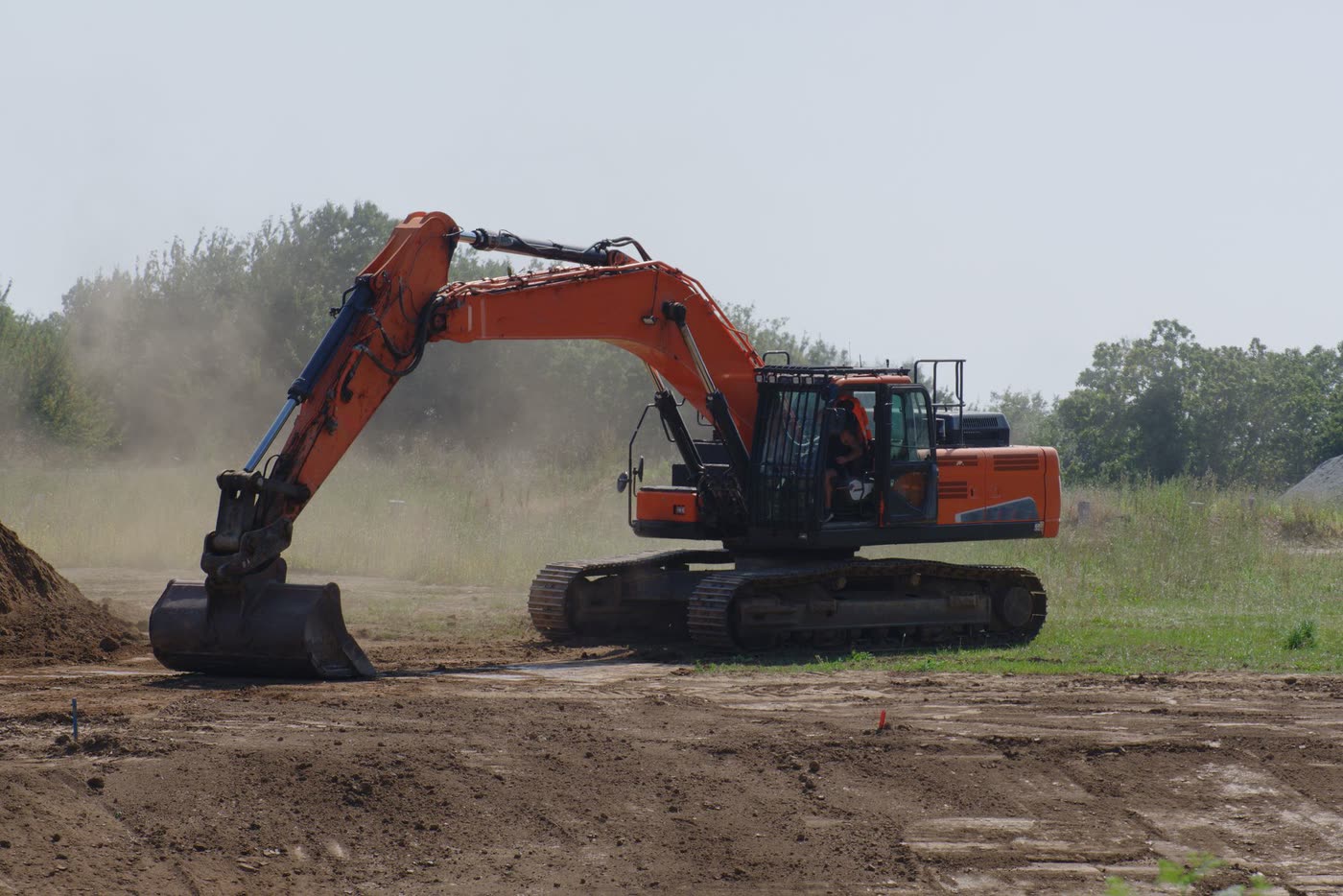
Dig down to a firm formation and cart the spoil away. Typically 250–300mm below finished level for a car driveway, deeper if the ground is soft. Disposal is a real cost, it is why resin over an existing base is so much cheaper than a full rebuild.
- Geotextile membrane
A separation layer between the ground and the stone. Without it, sub-base migrates down into soft ground over the years and the drive settles. It costs very little and is skipped constantly.
- Sub-base
Compacted MOT Type 1 crushed stone. This is the structural layer. 150mm can be defensible on free-draining ground; 200mm or more is what clay needs. It must be laid and compacted in layers, not tipped in one lift and rolled once.
- Edge restraint
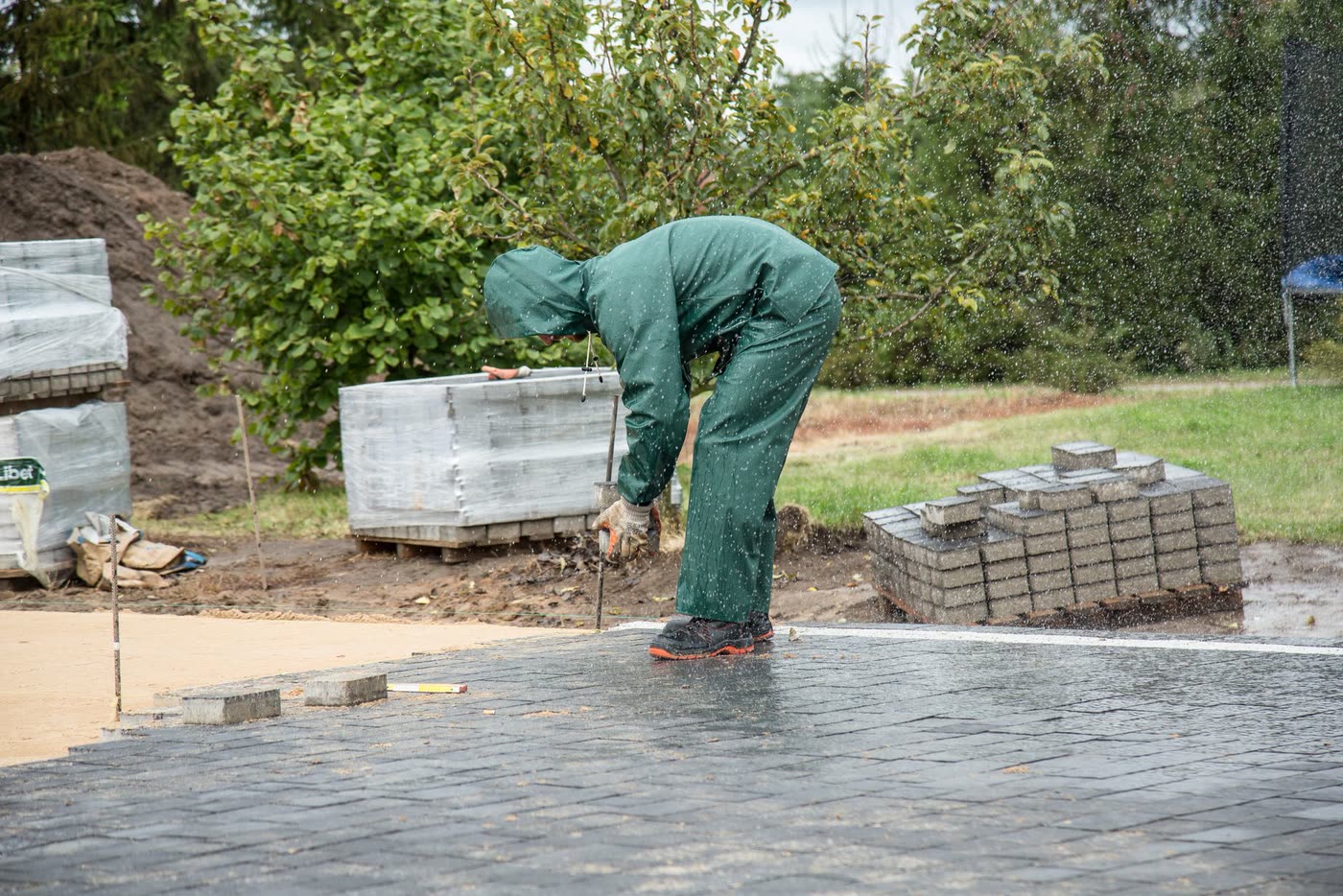
Kerbs or edging blocks bedded and haunched in concrete. Block paving in particular is held together by its perimeter, without restraint the whole field creeps and the joints open up.
- Surface
The part you chose from a brochure, and the least structurally important layer of the five.
Drainage and planning permission
Since 2008, laying more than five square metres of impermeable surface in a front garden in England needs planning permission, unless the water drains to a permeable area or a soakaway within your own property.
Almost nobody applies. What they do instead is build permeably, which is simpler, and in most cases costs less than the application would take in time. That can mean a permeable surface such as resin bound or permeable block paving, or a conventional surface laid to fall towards a soakaway, border or rain garden on your own land.
What is not acceptable, and is unfortunately common, is a drive laid to fall straight onto the pavement and into the highway drain. It is a planning breach, it is antisocial in a wet week, and it does not appear on the quote as a saving.
Costs and comparison
| Surface | Typical £/m² installed | Realistic lifespan | Best suited to |
|---|---|---|---|
| Block paving | £80–£140 | 20 years+ | Most homes. Repairable in sections. |
| Resin bound | £70–£120 | 15 years+ | Over a sound existing base. Seamless and permeable. |
| Tarmac | £45–£90 | 15–20 years | Larger areas and long drives, on cost per m². |
| Gravel (stabilised) | £40–£80 | 10–20 years | Rural and period frontages. Permeable by default. |
| Pattern imprinted concrete | £70–£120 | 15–20 years | A single continuous slab. Hard to repair invisibly. |
| Natural stone | £120–£220 | 30 years+ | Period and conservation frontages. |
FAQ
Common questions.
What is the cheapest driveway surface?
Tarmac and stabilised gravel are the cheapest per square metre, and on a large area the gap is significant. On a small front garden the difference is much smaller, because the fixed costs, excavation, disposal, edging, drainage, dominate and the surface is a minor part of the total.
How long should a driveway last?
Twenty years and more from block paving or natural stone, fifteen-plus from resin and pattern imprinted concrete, fifteen to twenty from tarmac. Those figures assume the build below is right. On a thin sub-base every one of them fails inside five years, which is why the specification matters more than the material.
Do I need planning permission for a driveway?
Not if the surface is permeable, or if the water drains to a soakaway or planted area within your property. You do need it for more than five square metres of impermeable surface at the front of a house draining onto the road. A dropped kerb is a separate application to your local highway authority and is needed whenever you cross a footway.
Should I pay a deposit?
A deposit for materials on a scheduled job is normal. A large deposit demanded before anything is ordered, in cash, from someone who knocked on your door, is not. There is more on contracts, deposits and your cancellation rights on the driveway company page.
How much does a driveway cost?
As indicative regional ranges installed: tarmac roughly £45 to £90 per square metre, resin bound £70 to £120 over a sound base, block paving £80 to £140, natural stone £120 to £220. Ground conditions and access move those more than the surface choice does, so treat them as a starting point and not a quote.
Do you need planning permission for a driveway?
Not if the surface is permeable, or if the water drains to a soakaway or a planted area inside your own boundary. You do need it for more than five square metres of impermeable surface at the front of a house draining onto the road. A dropped kerb is a separate application to the highway authority.
Which driveway surface is cheapest?
Tarmac per square metre, and it stays the cheapest on a large area. On a small drive the gap narrows, because the fixed costs of excavation, disposal of spoil and edging are the same whatever goes on top.
Related pages
Written and reviewed by the PaveLocal team. We build and specify driveways across Northamptonshire, Buckinghamshire and Bedfordshire. Pricing and specification guidance on this page reflects what these jobs cost and involve in this region, not a national average.
Free quote
Get a free quote.
Send your postcode and a rough size and we will arrange a survey. A photo of what is there now tells us more than a paragraph does.
- Itemised, in writingExcavation, sub-base depth, edging, drainage and surface priced as separate lines, so you can compare quotes properly.
- Surveyed before it is pricedGround conditions decide the cost of a driveway. Anyone quoting a firm price off a photo is guessing.
- No obligationA quote is a quote. If you use someone else, that is fine, we will not chase you about it.
Prefer to talk it through? Call 07423 123796, message us on WhatsApp or email info@pavelocal.co.uk.