Commercial
Car park surfacing.
New car parks and resurfacing, built for the vehicles that use them and marked out so the layout works before the lines go down.
- Typical build
- Sub-base, base course, wearing course
- Heavy standing areas
- Concrete block paving or reinforced slab
- Drainage
- Falls to gullies or channels, consented outfall
- Markings
- Thermoplastic for durability, paint for temporary
- Written, itemised quotesExcavation, sub-base, edging and drainage priced separately
- Site survey before pricingNobody prices a driveway properly from a satellite photo
- Compliant surface water drainageBuilt to meet the 2008 permeable-surface rules, not around them
- Local installers onlyCrews working their own patch, not a national call centre
A car park is a paving job with three extra disciplines attached: structural design for the traffic it carries, a surface water strategy that satisfies the planning conditions, and a layout that works for the people using it.
The third one is the one most often got wrong, and it is the cheapest to get right, bay dimensions, aisle widths and turning circles are all decided before any material is ordered.
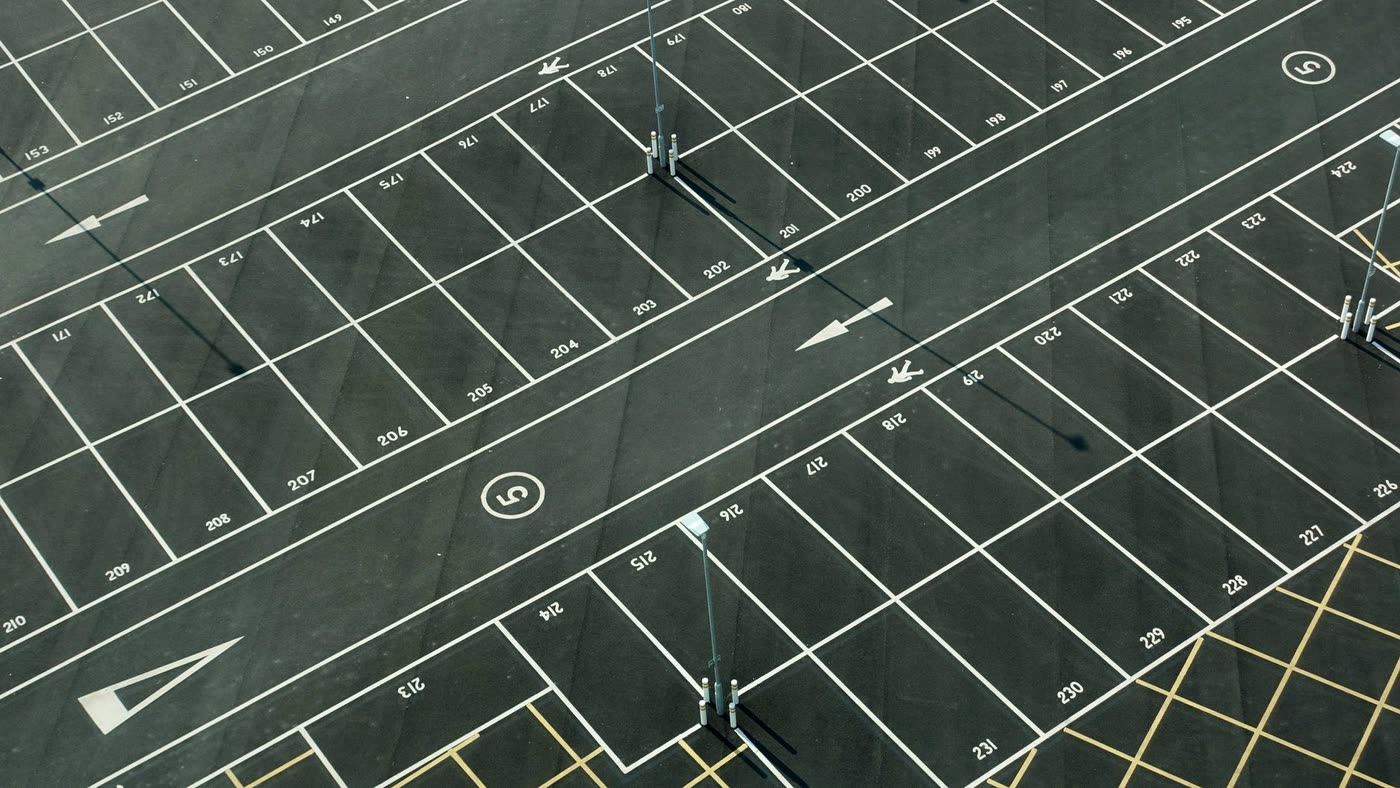
Bay sizes, aisle widths, circulation and accessible bay provision all need settling at design stage. Repainting lines is easy; moving a kerb line, a gully or a lighting column because the aisle turned out to be too narrow is not. On any car park serving the public, accessible bays need to be the right size, in the right place relative to the entrance, and marked correctly, that is a design decision, not a line-marking one.
Construction and resurfacing
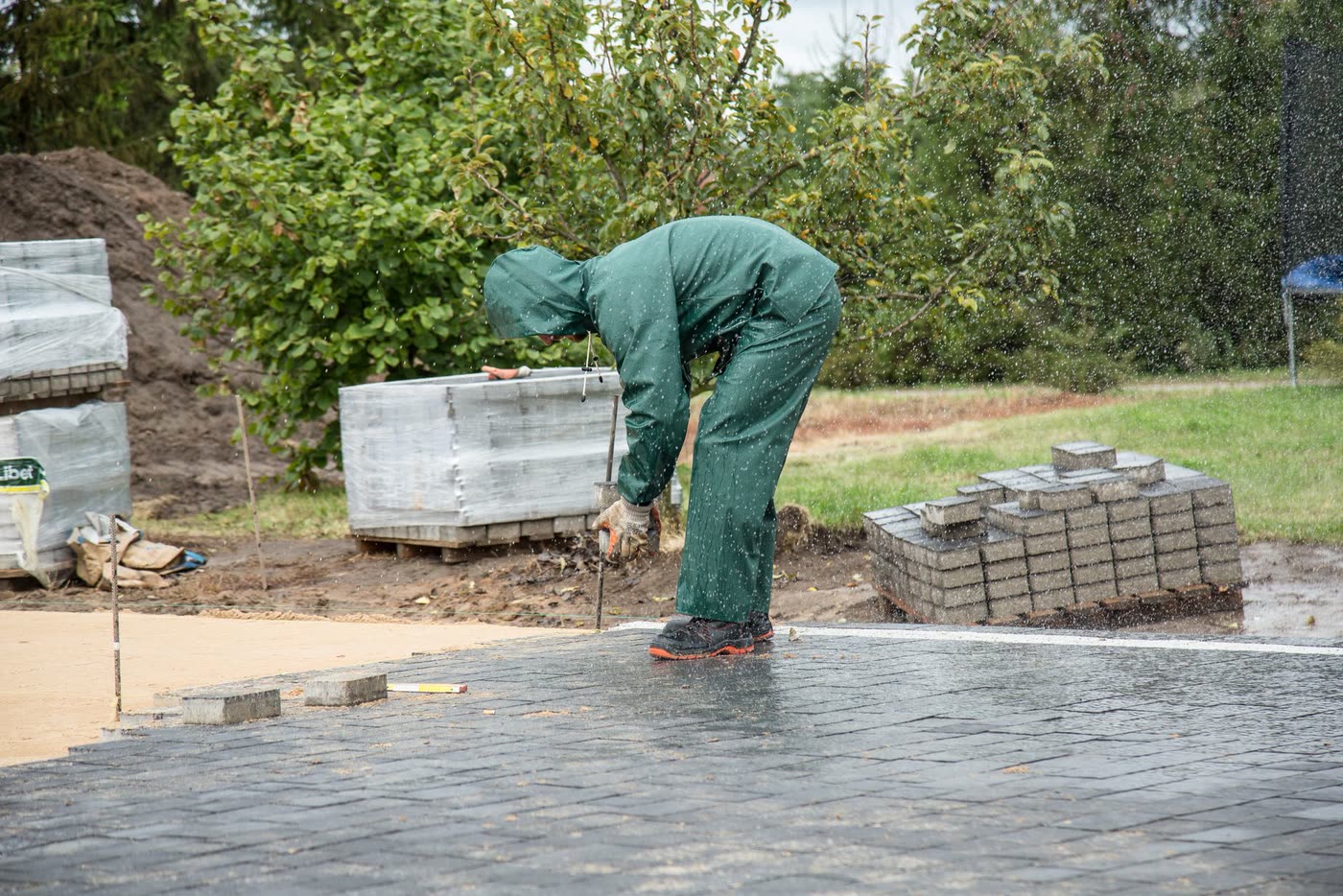
A new car park is built like a road: compacted sub-base, a bound base course and a wearing course, with the thicknesses set by the traffic. Areas where vehicles turn tightly, stand for long periods, or where lorries manoeuvre take more punishment than the aisles and are often built heavier or in block paving.
Resurfacing an existing car park is usually a plane-off and overlay: the worn wearing course is milled away and a new one laid, keeping the levels and the drainage as they are. It is considerably cheaper and quicker than reconstruction, and it works only where the base is still sound. Where potholes are recurring in the same places, the base has failed locally and those areas need reconstructing regardless of what happens elsewhere.
Drainage and planning conditions
Car parks generate a lot of run-off, and on new development the surface water strategy is normally fixed by a planning condition. That can require permeable surfacing, attenuation storage, a restricted discharge rate, or an interceptor where there is a fuel or oil risk.
Retrofit is where this gets expensive. Adding attenuation under a finished car park means digging it up. Establishing the drainage requirement before construction is the single largest avoidable cost on this kind of job.
Markings and signage
Thermoplastic markings are hot-applied, thicker than paint and last several times longer under traffic, the right choice for a permanent layout. Paint is cheaper and appropriate for temporary or frequently changed arrangements.
Whatever the material, markings go down after the surface has cured. On new bitmac that means waiting, and a contractor who marks too early gets adhesion failure and a car park that needs remarking within a year.
FAQ
Common questions.
How long does a car park resurface take?
It depends on area and phasing. A plane-and-overlay on a modest car park is typically a few days of working time, and phasing to keep part of it open extends the programme while reducing the disruption. Where the base has to be reconstructed in places, allow longer.
Can the car park stay open during the work?
Usually in part. We phase the work so a section stays available, and where that is not possible, out-of-hours or weekend working is often the better answer. It needs to be in the scope from the start because it affects both price and programme.
What surface is best for a car park?
Bitmac for the general area, on cost and speed. Concrete block paving where vehicles stand and turn repeatedly, or where services run underneath and access matters. Reinforced concrete for the heaviest static loads. Most car parks end up using more than one.
Do you do the line marking as well?
Yes, as part of the same job, thermoplastic for permanent layouts, paint where the arrangement may change. Layout, bay dimensions and accessible bay provision are agreed at design stage rather than decided with a marking machine on site.
How often should a car park be resurfaced?
Surface dressing every ten to fifteen years typically, with a full rebuild only when the base has gone. Deal with potholes and standing water early. Both are cheap to fix and expensive to ignore, because water in the base is what turns a surface problem into a structural one.
Do you do line marking?
Yes, including bay layout, accessible bays and directional markings. Worth planning at the same time as the surface rather than afterwards, because bay sizes affect how the area is set out.
Related pages
Written and reviewed by the PaveLocal team. We build and specify driveways across Northamptonshire, Buckinghamshire and Bedfordshire. Pricing and specification guidance on this page reflects what these jobs cost and involve in this region, not a national average.
Free quote
Get a free quote.
Send your postcode and a rough size and we will arrange a survey. A photo of what is there now tells us more than a paragraph does.
- Itemised, in writingExcavation, sub-base depth, edging, drainage and surface priced as separate lines, so you can compare quotes properly.
- Surveyed before it is pricedGround conditions decide the cost of a driveway. Anyone quoting a firm price off a photo is guessing.
- No obligationA quote is a quote. If you use someone else, that is fine, we will not chase you about it.
Prefer to talk it through? Call 07423 123796, message us on WhatsApp or email info@pavelocal.co.uk.