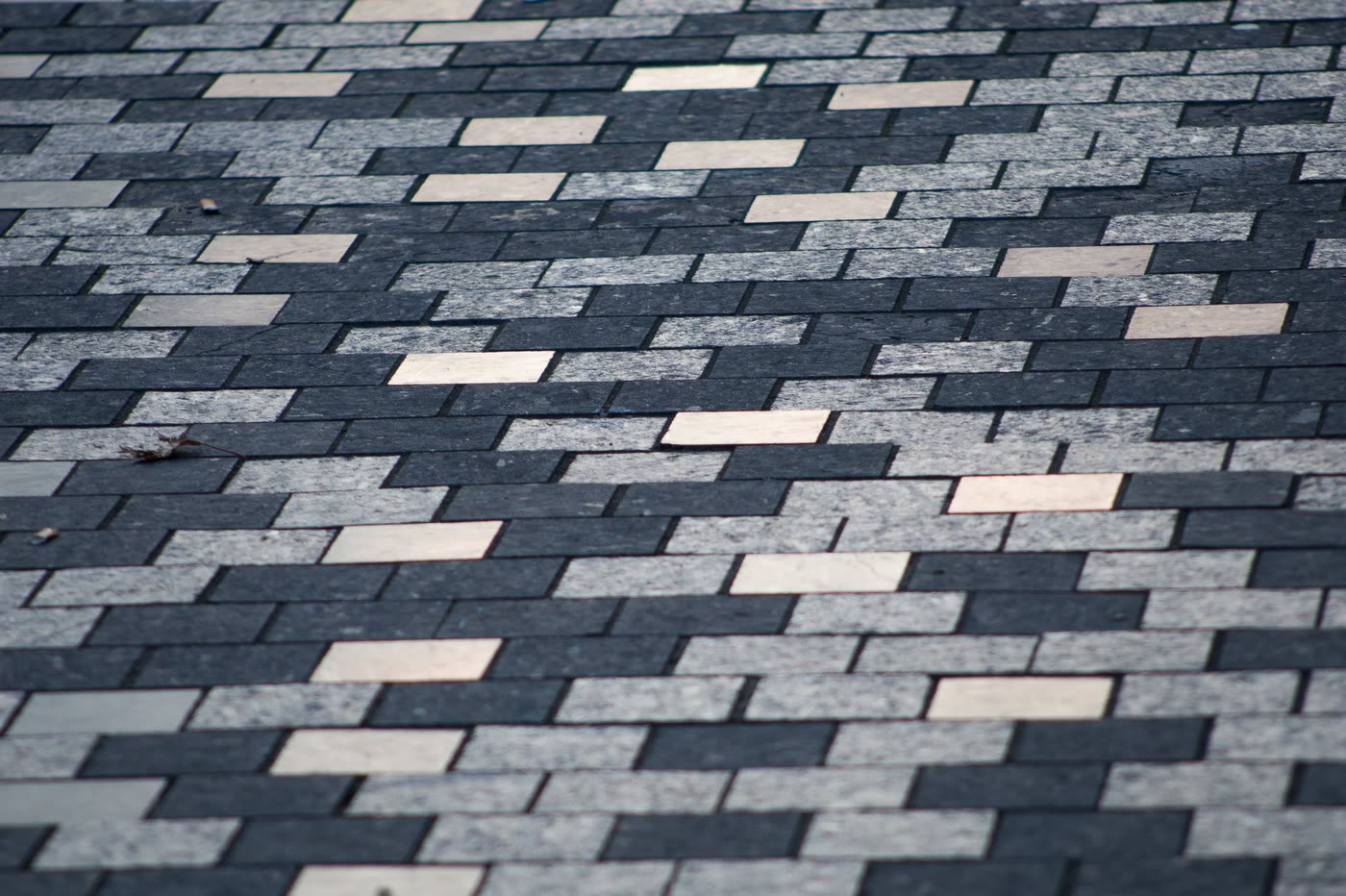
Surfaces
Natural stone driveways.
The most expensive option and the only one that genuinely improves with age. On the right property it is not extravagance, it is the correct material.
- Cost
- £120–£220/m² installed (indicative)
- Lifespan
- 30 years+, often far more
- Best for
- Period and conservation frontages
- Laying
- Setts on a bound bed, not loose sand
- Written, itemised quotesExcavation, sub-base, edging and drainage priced separately
- Site survey before pricingNobody prices a driveway properly from a satellite photo
- Compliant surface water drainageBuilt to meet the 2008 permeable-surface rules, not around them
- Local installers onlyCrews working their own patch, not a national call centre
Natural stone covers a range of materials with quite different properties: granite setts, sandstone, limestone, porphyry and yorkstone among them. What they share is that the colour and texture are the material itself, so they weather rather than deteriorate.
It is the right answer on period frontages, in conservation areas, and anywhere a concrete imitation of stone would look like exactly that, which, next to real stone on the same street, it always does.
The stone that works beautifully on a patio is frequently unsuitable for a driveway. Thin sandstone or limestone flags laid for foot traffic will crack under a car. For a driveway you want either setts, which are small and deep enough to take the load, or driveway-grade flags at an appropriate thickness bedded on a full mortar bed over concrete. Anyone quoting standard 22mm patio flags for a drive is quoting a surface that will break.
Granite setts
The most durable option and the traditional one for a trafficked surface. Granite is extremely hard, does not wear noticeably, and is available sawn to regular sizes or split with a natural riven face.
For driveway use, setts are normally bedded on a mortar bed over a concrete base and jointed with a mortar or a resin jointing compound, rather than laid on sand like concrete blocks. It is a slower, more skilled job, which is a large part of why the installed price is what it is.
Sandstone, limestone and porphyry
Sandstone is warmer in colour and softer than granite, and is popular where the buff and brown tones suit local buildings. It needs to be a driveway-appropriate thickness, and some sandstones are porous enough to stain and to hold algae in a shaded spot.
Limestone gives a tighter, more uniform look and suits properties in limestone areas. It is more sensitive to acidic cleaning products than granite.
Porphyry is less common in the UK and worth knowing about: extremely hard-wearing, naturally slip-resistant, with a distinctive warm-grey to red range. It behaves much like granite in use.
Ethics and sourcing
A large share of imported sandstone comes from quarries where labour standards have been a documented and serious problem. Reputable suppliers can evidence their sourcing, and Ethical Trading Initiative membership is one signal among several.
It is a fair question to ask a supplier and we would rather raise it here than leave it unsaid, the cheapest imported stone on the market is cheap for reasons that are worth understanding before you buy it.
FAQ
Common questions.
Is natural stone worth the extra cost?
On a period or conservation frontage, generally yes, it is the material the building was designed around, it lasts far longer than any alternative, and it improves with weathering rather than degrading. On a modern estate house it is a lot of money for a look that clay pavers get most of the way to.
Do stone setts need sealing?
Granite does not need it. Sandstone and limestone are more porous and a breathable sealer can reduce staining and algae, particularly in shade. Use a sealer intended for natural stone, the wrong product can trap moisture and cause more problems than it solves.
Are setts uncomfortable to walk on?
Riven setts have an uneven surface and are noticeably less smooth than a flat paver. Sawn setts with tight joints are much easier underfoot. If accessibility matters, a sawn finish with narrow joints, or a smooth border strip on the walking route, is worth specifying.
Can setts be laid on sand like block paving?
Not for driveway use. Setts vary in depth and are typically bedded on mortar over a concrete base, with mortar or resin jointing. Laid on sand they move independently and the surface goes uneven.
Is natural stone worth the cost on a driveway?
On a period or conservation frontage, often yes, because nothing else looks right and it will outlast the house owner. On a modern estate it is a lot of money for a look that block paving approximates closely. We will say which we think you are.
Does natural stone need sealing?
Sandstone and limestone benefit from it, granite largely does not. Sealing reduces staining and makes cleaning easier, and it needs redoing periodically. Ask before assuming a quote includes it.
Is natural stone slippery when wet?
Sawn and honed finishes can be, riven and flamed finishes much less so. On a driveway that slopes towards a garage, the finish matters more than the stone.
Related pages
Written and reviewed by the PaveLocal team. We build and specify driveways across Northamptonshire, Buckinghamshire and Bedfordshire. Pricing and specification guidance on this page reflects what these jobs cost and involve in this region, not a national average.
Free quote
Get a free quote.
Send your postcode and a rough size and we will arrange a survey. A photo of what is there now tells us more than a paragraph does.
- Itemised, in writingExcavation, sub-base depth, edging, drainage and surface priced as separate lines, so you can compare quotes properly.
- Surveyed before it is pricedGround conditions decide the cost of a driveway. Anyone quoting a firm price off a photo is guessing.
- No obligationA quote is a quote. If you use someone else, that is fine, we will not chase you about it.
Prefer to talk it through? Call 07423 123796, message us on WhatsApp or email info@pavelocal.co.uk.