Surfaces
Pattern imprinted concrete.
One continuous slab, stamped and coloured to look like paving. It has real advantages, and two drawbacks that deserve to be said out loud.
- Cost
- £70–£120/m² installed (indicative)
- Lifespan
- 15–20 years
- Maintenance
- Reseal every 3–5 years
- Repairability
- Poor, patches remain visible
- Written, itemised quotesExcavation, sub-base, edging and drainage priced separately
- Site survey before pricingNobody prices a driveway properly from a satellite photo
- Compliant surface water drainageBuilt to meet the 2008 permeable-surface rules, not around them
- Local installers onlyCrews working their own patch, not a national call centre
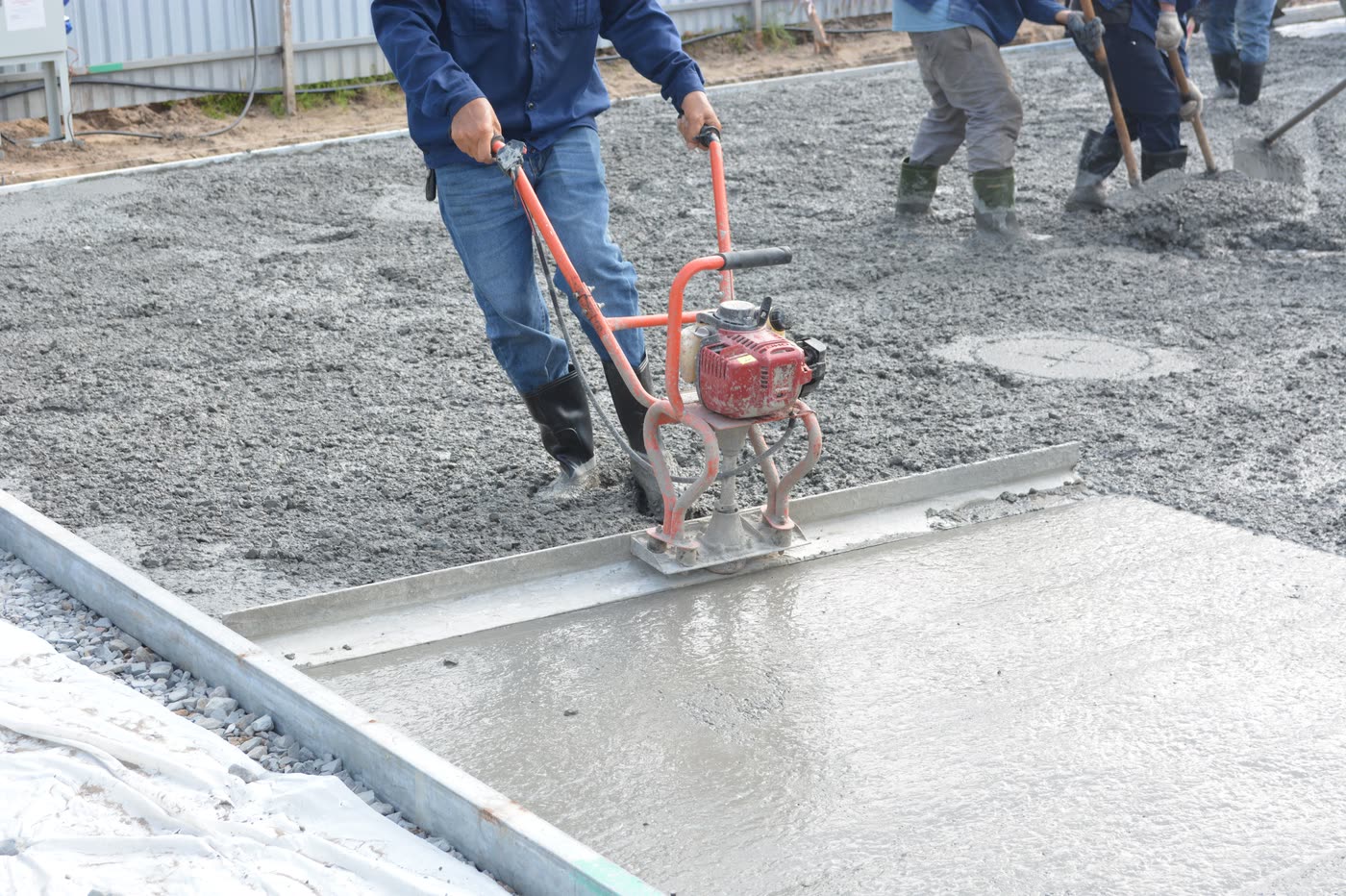
Pattern imprinted concrete, also sold as printed, stamped or imprinted concrete, is a single reinforced concrete slab, coloured while wet and stamped with mats to give the texture of setts, slate or brick.
Laid well it is genuinely strong, has no joints for weeds, and produces a uniform finish over a large area at a lower cost than natural stone. It is also the surface we get asked to fix most often, so this page is deliberately even-handed rather than enthusiastic.
First, it cannot be repaired invisibly. It is one slab: if a service trench goes through it, or a section cracks, the patch will be visible for the rest of its life because colour, texture and weathering will never match. Second, it needs resealing every three to five years to keep its colour and surface. That is a recurring cost and a recurring job, and neither always gets mentioned when the surface is sold on the basis of being maintenance-free.
What it does well
It is a continuous reinforced slab, so it is strong and there are no individual units to sink. There are no joints, so no weeds and no jointing sand to top up. It covers a large area in one uniform finish for a fraction of what natural stone would cost, and it can follow curves and awkward shapes without cutting.
For a large, plain area where repairability is not a concern, it is a reasonable choice.
What it does badly
Cracking is the risk. Concrete moves, and it is controlled with reinforcement and induced joints, a slab without adequate crack control on ground that moves will crack, and on clay that is a real possibility rather than a remote one.
The colour is in the surface layer rather than through the material, so heavy wear, aggressive cleaning or a failed seal exposes grey concrete underneath. Pressure washing it too aggressively is a common way to ruin one.
And it locks you in. Once a slab is down, changing surface means breaking it out, which is expensive. Block paving and gravel are both far easier to change your mind about later.
FAQ
Common questions.
Does pattern imprinted concrete crack?
It can. Concrete moves with temperature and with the ground under it, which is why a properly built slab has reinforcement and induced joints to control where any cracking happens. On clay, crack control is not optional. A slab laid without it is a gamble.
How often does it need resealing?
Every three to five years in normal conditions. The seal is what protects the colour layer and gives the surface its sheen. Skipping it does not cause immediate failure but the surface dulls and becomes more vulnerable to wear and staining.
Can it be repaired?
Structurally, yes. Invisibly, no. Because it is one continuous coloured slab, any repair is a new patch of concrete that will differ in colour and texture and will weather differently. That is the single biggest practical difference against block paving.
Is it slippery?
The texture from the imprint gives reasonable grip, but the sealer can be slippery when wet, particularly on a slope. Anti-slip additives can be mixed into the sealer and are worth asking for on any sloping area.
How long does imprinted concrete last?
Fifteen to twenty years laid properly, with resealing every three to five years to keep the colour and the surface. Skip the resealing and it fades and starts to surface-scale, which is the usual reason a tired one looks worse than its age.
Can imprinted concrete be repaired?
Not invisibly, and this is the main drawback. It is one continuous slab, so a patch will always show as a patch, and a service trench through it means a visible repair. If anything is likely to be dug up later, block paving is the better answer.
Does imprinted concrete crack?
It is designed to crack, at control joints cut in while it cures, which is how the slab manages movement without cracking randomly. Cracks away from those joints usually mean the sub-base moved or the joints were cut too late or too shallow.
Related pages
Written and reviewed by the PaveLocal team. We build and specify driveways across Northamptonshire, Buckinghamshire and Bedfordshire. Pricing and specification guidance on this page reflects what these jobs cost and involve in this region, not a national average.
Free quote
Get a free quote.
Send your postcode and a rough size and we will arrange a survey. A photo of what is there now tells us more than a paragraph does.
- Itemised, in writingExcavation, sub-base depth, edging, drainage and surface priced as separate lines, so you can compare quotes properly.
- Surveyed before it is pricedGround conditions decide the cost of a driveway. Anyone quoting a firm price off a photo is guessing.
- No obligationA quote is a quote. If you use someone else, that is fine, we will not chase you about it.
Prefer to talk it through? Call 07423 123796, message us on WhatsApp or email info@pavelocal.co.uk.