Surfaces
Gravel driveways.
Cheap, permeable by default, and much better than its reputation, provided it is laid in a grid rather than tipped loose over a membrane.
- Cost
- £40–£80/m² installed (indicative)
- Lifespan
- 10–20 years, topping up occasionally
- Permeability
- Permeable by default, no planning issue
- Essential
- A cellular stabilising grid
- Written, itemised quotesExcavation, sub-base, edging and drainage priced separately
- Site survey before pricingNobody prices a driveway properly from a satellite photo
- Compliant surface water drainageBuilt to meet the 2008 permeable-surface rules, not around them
- Local installers onlyCrews working their own patch, not a national call centre
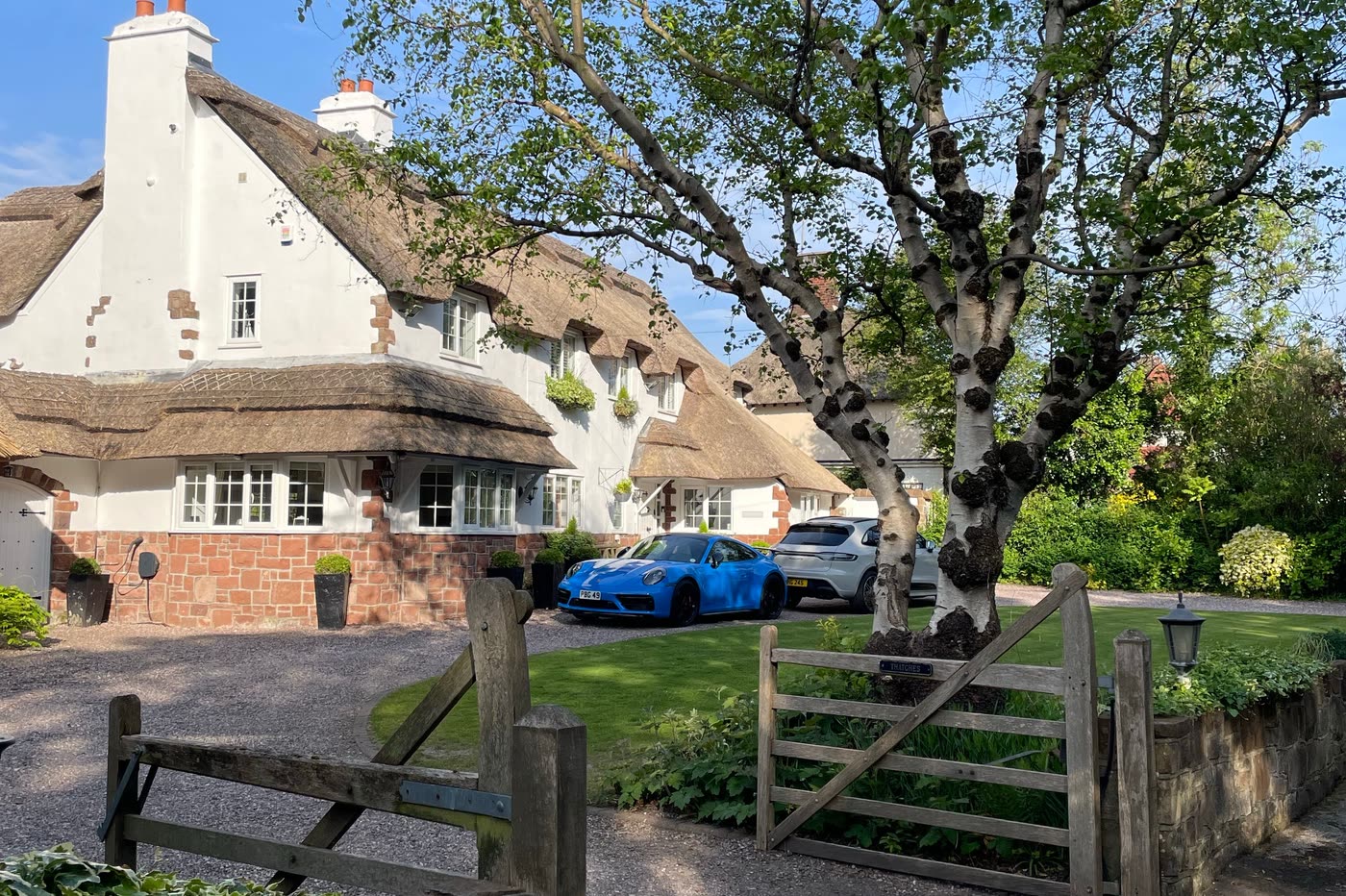
Gravel is the oldest driveway surface there is and still the right answer on plenty of properties, particularly rural and period ones where a bound surface would look wrong.
It also has one genuine technical advantage: it is permeable without needing any special specification, so the front garden planning rules are simply not an issue.
These are different products with the same name. Loose gravel over a membrane is the cheap version: it migrates into the road and the lawn, ruts into tracks under wheels, ends up piled at the low end of any slope, and is hard work to walk on or push a pram over. Stabilised gravel is laid into a cellular grid, a honeycomb of plastic cells that holds the stone in place. It does not migrate, it does not rut, it is comfortable underfoot, and it is usable on a slope. The grid adds meaningfully to the cost and it is the difference between a surface people like and one they replace.
Choosing the stone
Angular stone locks together and stays put. Rounded pea shingle rolls, and in a grid it is less stable than angular gravel of the same size. For a driveway, 10–20mm angular is the usual sensible range, small enough to be comfortable underfoot, large enough not to lodge in tyre treads and end up indoors.
Colour is worth seeing wet as well as dry, and worth seeing against the house. Local stone almost always looks right; a bright imported white marble chip on a red brick semi almost always does not.
Slopes, and where gravel does not work
Loose gravel on a slope migrates downhill, and no amount of raking fixes that. In a stabilising grid a gravel drive handles a moderate slope perfectly well, which is the main thing the grid buys you beyond tidiness.
Gravel is a poor choice where a wheelchair or a mobility scooter needs to use it regularly, even in a grid, resin bound is the surface people choose for that. It is also a nuisance immediately next to a lawn you mow, and where a snowplough or shovel will be used, because you will move the stone with the snow.
FAQ
Common questions.
Do gravel driveways need planning permission?
No. Gravel is permeable, so it falls outside the impermeable-surface rules that apply to front gardens. A dropped kerb is still a separate application to your local highway authority if you are crossing a footway.
How do I stop gravel spreading everywhere?
Lay it in a cellular stabilising grid over a compacted sub-base, and give it a proper edge restraint. Those two things solve almost all of it. Loose gravel over membrane, which is what most disappointing gravel drives are, will always migrate.
How often does gravel need topping up?
In a grid, rarely, the stone stays where it is put and you may never need to add much. Loose gravel typically needs topping up every few years, which is a recurring cost worth including when comparing it against a bound surface.
Is gravel noisy?
It crunches, which some people specifically want as an arrival alert and others find tiresome. In a grid the effect is reduced but not eliminated.
How do you lay a gravel driveway?
Excavate, membrane, compacted sub-base, then either a stabilising grid filled with gravel or a deeper loose layer behind a proper edge. The grid is what stops it migrating into the road and rutting into tracks, and it is the difference between a drive that stays put and one that needs topping up every year.
Is gravel a permeable surface?
Yes, by default, so it avoids the planning question entirely provided the sub-base drains too. It is the simplest way to satisfy the rules without designing a drainage solution.
What depth of gravel do you need?
Around 50mm in a stabilising grid, or 50 to 75mm loose over a compacted base. Deeper than that and it becomes hard to walk on and worse to drive on, not better.
Related pages
Written and reviewed by the PaveLocal team. We build and specify driveways across Northamptonshire, Buckinghamshire and Bedfordshire. Pricing and specification guidance on this page reflects what these jobs cost and involve in this region, not a national average.
Free quote
Get a free quote.
Send your postcode and a rough size and we will arrange a survey. A photo of what is there now tells us more than a paragraph does.
- Itemised, in writingExcavation, sub-base depth, edging, drainage and surface priced as separate lines, so you can compare quotes properly.
- Surveyed before it is pricedGround conditions decide the cost of a driveway. Anyone quoting a firm price off a photo is guessing.
- No obligationA quote is a quote. If you use someone else, that is fine, we will not chase you about it.
Prefer to talk it through? Call 07423 123796, message us on WhatsApp or email info@pavelocal.co.uk.