Driveway guide
Porcelain driveway: when porcelain works for cars and when it cracks
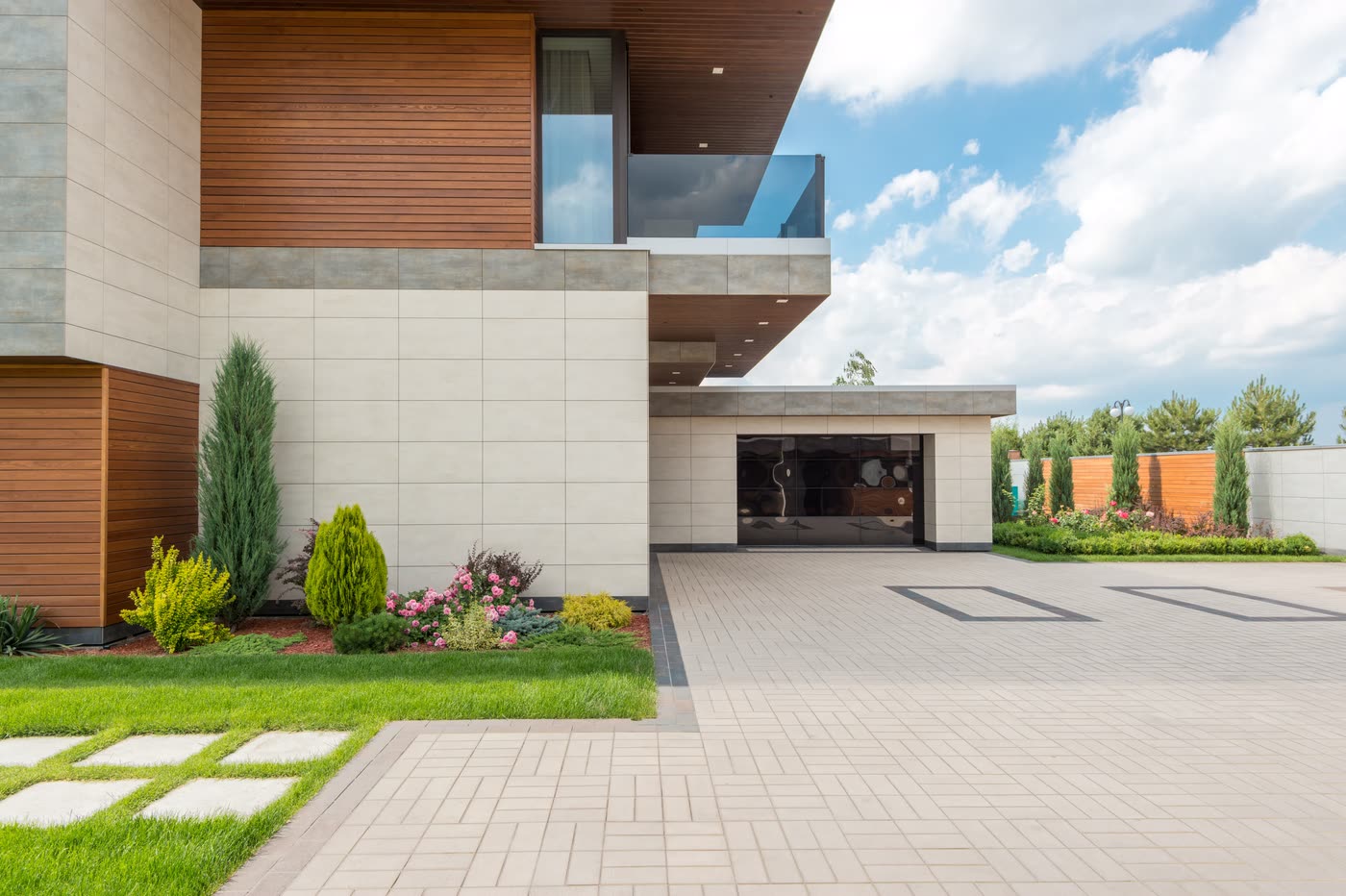
A porcelain driveway looks sharp, cleans easily and matches the patio a lot of people already have out the back. That last point is where the trouble starts. The porcelain sold for patios is not built to take a car, and a drive laid with it, or laid on a patio-style base, cracks. Done to a driveway specification it can work. This guide covers what that specification is, and how porcelain compares with block paving and natural stone.
Can you use porcelain for a driveway?
Yes, but not the standard slab. Most outdoor porcelain is around 20mm thick and is made for foot traffic. Suppliers say so plainly: Universal Paving warns that standard 20 to 22mm slabs, porcelain included, will crack under vehicle weight. Marshalls sells a separate 30mm porcelain range for driveways for the same reason.
A thin, rigid slab cannot flex. A car's weight arrives through four small tyre patches, and any slab that is not fully supported from below snaps rather than bends. That is why thickness is only half the answer. The other half is what it sits on.
What a porcelain driveway needs underneath
Block paving is a flexible surface. It sits on a sand bed and the blocks lock together, so a little movement is shared out. Porcelain is a rigid surface, so the build-up is different:
- A deeper sub-base. Marshalls' laying guidance moves from 100mm of sub-base for a patio to 200mm for a driveway, adjusted for ground conditions. On the clay that sits under much of Milton Keynes and Bedfordshire, the dig often needs to go further, which the clay ground guide explains.
- A full mortar bed. Every slab bedded on a continuous layer of mortar, not dabs. Any void under a slab is where it will crack.
- A primer on the back of each slab. Porcelain barely absorbs water, so mortar will not grip it on its own. A slurry primer is brushed onto the underside before laying, as the manufacturers specify.
- Falls and drainage designed in. Porcelain is impermeable. Water has to run off to a permeable area or a drain within your boundary, or the drive can need planning permission, as the planning guide sets out.
- Proper jointing. Even, narrow joints filled with a jointing compound suited to vehicle areas.
The question to ask any installer: what thickness of porcelain, what depth of sub-base, and is every slab primed and laid on a full bed? If any of those answers is vague, the price is for a patio, not a drive.
Where a porcelain driveway makes sense
- Light use. A short drive for one or two cars, parked and driven straight in, rather than a turning area for a van.
- Matching the house. Where the same tones run from the front door through to a porcelain patio.
- Easy cleaning. Porcelain absorbs very little, so oil and leaf stains sit on the surface rather than soaking in.
Where it is the wrong choice
- Heavy or turning traffic. Vans, motorhomes and tight three-point turns put twisting loads on a rigid surface.
- Services under the drive. Lifting porcelain bedded on mortar means breaking slabs. With blocks, a section can be lifted and relaid. The block paving and resin comparison covers why repairability matters.
- Slopes and shade. Driveway porcelain is made with grip in mind, Marshalls rates its range R11, but a steep, shaded drive that stays damp will still be slippery when it is icy or covered in leaves.
- A tight budget. Marshalls places it above some alternatives on price and below natural stone. Add the deeper base and the slower bedded laying, and it is rarely the cheap option.
Porcelain driveway or block paving?
For most family drives I would still point people to block paving. It is designed for cars, it can be laid permeable, and any section can be lifted and relaid without anyone being able to tell. Porcelain wins on looks and on how easy it is to keep clean, and it is a fair choice for a short, lightly used drive where the client accepts that a repair will show.
A middle route that works well is a block paved drive with porcelain on the path and patio, so the frontage ties together without asking a 30mm slab to carry a car it was never meant to.
Looking after it
Porcelain does not need sealing. A brush and a wash keeps it clean, and the joints are where any attention goes: check them each spring and refill any that have opened up. For a wider routine across every surface, see the block paving cleaning guide. If you are planning a new frontage in MK, my team and I cover both driveways in Milton Keynes and paving and patios in Milton Keynes.
Written and reviewed by the PaveLocal team. We build and specify driveways across Northamptonshire, Buckinghamshire and Bedfordshire. Pricing and specification guidance on this page reflects what these jobs cost and involve in this region, not a national average.