Driveway guide
Signs your driveway needs replacing (and signs it just needs repairing)
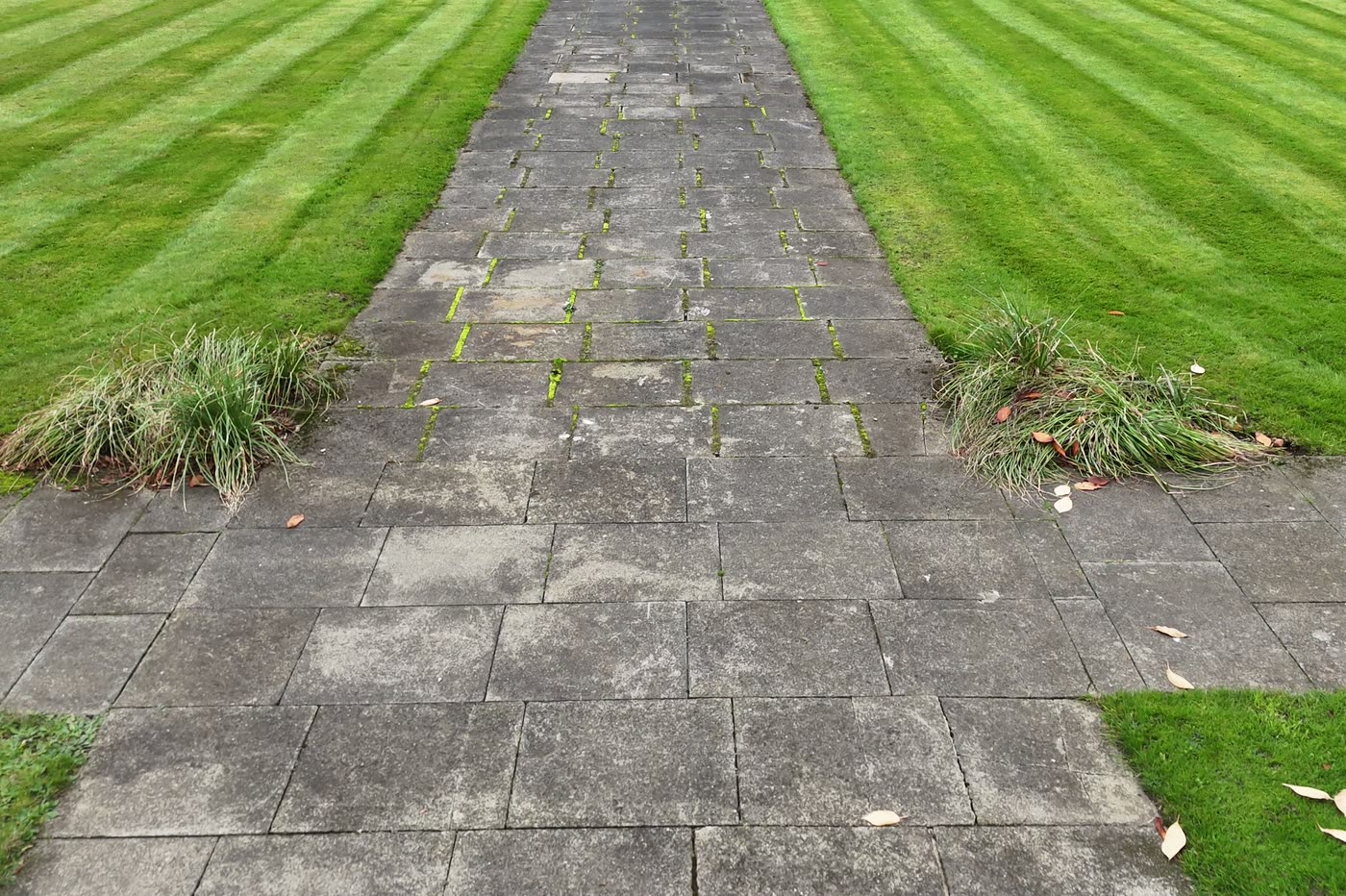
The signs your driveway needs replacing are mostly structural, and most driveway faults look similar from the doorstep while meaning completely different things. The question worth answering is not what the surface looks like, it is whether the structure underneath is still doing its job, because that decides whether you need a repair, a resurface or a full rebuild.
Here is how to read it yourself before anybody quotes you.
Signs it needs replacing
Rutting along both wheel tracks
Two parallel depressions running the length of the drive is the clearest signal there is. It means the load is being carried by something that cannot carry it , a sub-base that is too thin, was never properly compacted, or has migrated into soft ground below.
On block paving this is often caused by the laying course being used to make up levels rather than kept to a consistent 30–40mm. Whatever the cause, a surface repair does not touch it.
The same fault returning after a repair
If a dip has been filled once and has come back in the same place, the repair addressed the symptom. Something underneath is still moving, commonly a trench that was backfilled without compaction, or made ground that was never dug out. Paying for the same repair twice is a strong hint that the third one will not work either.
Sinking across the whole area
Localised dips are repairable. A drive that has settled generally, so the levels no longer relate to the thresholds and the garage, has a base problem across its whole footprint.
Standing water that has always been there
If water pools after every shower and always has, the falls are wrong. Falls are set by the base, so no new surface changes them. Either the drive is rebuilt to the correct levels or drainage is added to intercept the water, and the second option is a mitigation rather than a fix.
Cracking in a network across concrete
A single crack in a concrete slab can be stitched. A network of cracks, or cracks with a step between the two sides, means the slab is moving and the ground under it is not supporting it evenly. Resurfacing over that just reflects the cracks through the new surface within a couple of winters.
Crumbling that has reached the middle
Tarmac failing at the edges is an edge restraint problem and often repairable. Tarmac that has gone porous and is fretting across the whole area has reached the end of its life, and patching it becomes a patchwork that costs more in total than a resurface.
Signs it only needs repairing
A single sunken area
One dip, especially around a manhole, a gully or a line where a trench was dug, is a local base problem. Lift the affected area, correct and recompact the base, relay the same surface. On block paving this is genuinely invisible when it is done properly.
A crumbling edge with sound middle
Almost always missing or failed edge restraint. The fix is to build a proper haunched edge and make good, much cheaper than replacement, and it stops the failure working inwards.
Weeds and moss
Not a structural fault at all. Weeds germinate in windblown dirt sitting in depleted joints, not from below. Clean the drive, re-sand the joints with kiln-dried sand, and the problem largely goes away. Persistent moss in one patch usually means water is standing there, which is worth investigating as drainage.
Faded colour
Tarmac going grey is the bitumen oxidising at the surface, cosmetic, not structural. Older concrete blocks fading is a property of 1990s-era pigmentation. Neither means the drive has failed, and both can be improved with cleaning or, for tarmac, a surface treatment.
Individual damaged blocks
A cracked or oil-stained block can be swapped. If the drive is more than about ten years old the replacement will not match, so the trick is to lift a block from somewhere hidden, under where a car sits, or behind a gate, use that in the visible spot, and put the new block where nobody looks.
Walk the drive after heavy rain. Note where water stands and how long it takes to clear. Then look along the surface at eye level from one end, depressions and rutting show up from a low angle that are invisible looking straight down. Those two observations tell you most of what a survey will confirm.
What to do about a new-build driveway that is already failing
Early settlement on a developer-built drive is common rather than normal, and it is usually sub-base depth rather than a fault with the blocks. If the property is still within its developer warranty period, raise it with them first. It is free, and you should not be paying to correct a build fault somebody else is liable for.
Where the warranty has expired, a lift and relay is usually the right job: the blocks are fine, the base below them needs correcting, and reusing the original blocks avoids the colour-match problem entirely.
Repair, resurface or replace
- Repair
Localised faults with a sound base elsewhere. Cheapest by a wide margin, and the right answer more often than people assume.
- Resurface
Structure sound, falls correct, surface worn out. Resin over sound tarmac is the standout example. No excavation and no disposal, so a large saving.
- Replace
Base has failed, falls are wrong, or the same fault keeps coming back. Anything else is spending money to delay it.
If you are not sure which category you are in, send a photograph taken from the pavement and one taken along the surface at a low angle. Between them they answer the question most of the time.
If it turns out to be a surface problem rather than a structural one, you may only need a clean. Cleaning block paving without wrecking the joints covers doing that safely, and the cost guide gives you a realistic figure if it does turn out to be a rebuild.
Written and reviewed by the PaveLocal team. We build and specify driveways across Northamptonshire, Buckinghamshire and Bedfordshire. Pricing and specification guidance on this page reflects what these jobs cost and involve in this region, not a national average.