Driveway guide
Best driveway surface for clay ground: what holds up in Milton Keynes and Bedford
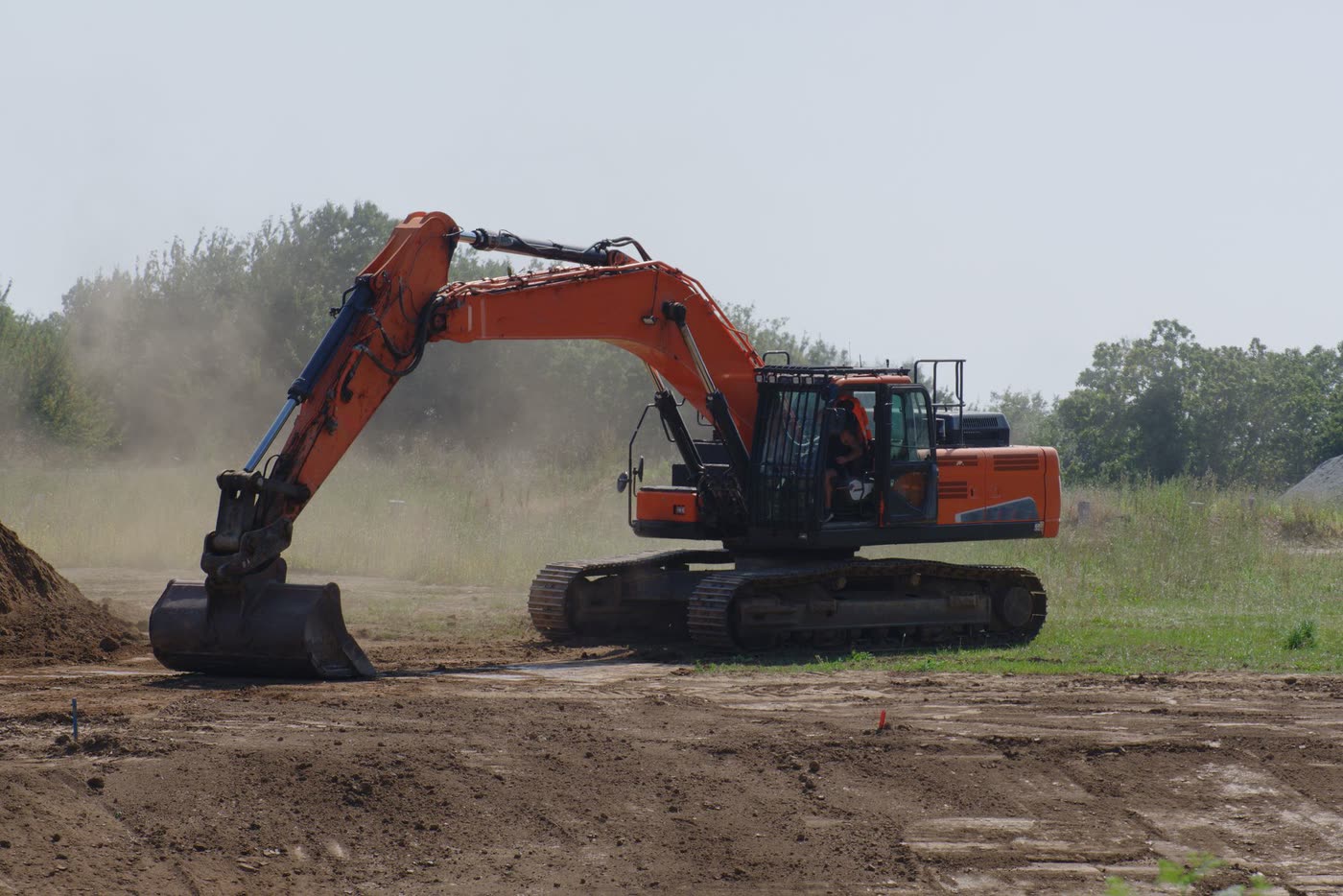
The best driveway surface for clay ground is the one built on the right base with somewhere for the water to go. That sounds like a dodge, but it is the main lesson from clay areas like Milton Keynes and Bedford: the surface is what you see, and the ground underneath is what decides how long it lasts. This guide explains why clay is hard on drives, then compares the surfaces one by one on clay. For local detail, see driveways in Milton Keynes.
Why clay is hard on driveways
Clay swells when it is wet and shrinks when it dries. That movement pushes and drops whatever sits on top. Clay also drains slowly, so water that gets under a drive stays there and softens the ground. A drive laid straight onto clay, or on a thin base, will dip in the wheel tracks and spread at the edges. The edging guide explains why the perimeter is usually the first thing to go.
What every surface needs on clay
- Excavation deep enough to get below the soft topsoil
- A compacted granular sub-base of the right depth, often with a geotextile membrane to stop the base and the clay mixing
- Proper falls, so water runs off rather than sitting on the surface
- A plan for where the water ends up, since clay will not soak it away quickly
Best driveway surface for clay: the options compared
Block paving. Copes well with small ground movement because it is made of separate units. If an area settles, it can be lifted and relaid with the same blocks. Standard block paving needs drainage designed in on clay, and permeable block paving only works if the water it lets through has somewhere to go.
Resin bound. Permeable, but it is only as good as the base under it. Over a sound, well-drained base it performs well. Over clay without drainage, the water simply collects below the surface.
Tarmac. Flexible enough to tolerate some movement and good value on larger areas, but it needs edging and falls done properly, and it is impermeable, so drainage has to be planned.
Gravel in a grid. Permeable and forgiving of movement, and cheap. The grid stops ruts. On heavy clay it still needs a proper base underneath.
Imprinted concrete. The least forgiving on moving ground, because it is one rigid slab. Cracks are hard to repair invisibly.
Signs the ground is the problem, not the surface
On clay, the same few faults turn up again and again, and none of them are fixed by a new surface on its own:
- Dips in the wheel tracks that come back after every wet winter
- Blocks spreading at the edges, or tarmac cracking along the sides
- Water standing on the drive long after rain has stopped
- Cracks that open in dry summers and close again in winter
Each of those points to the base or the drainage. If you replace the surface without dealing with them, you pay twice. The driveway repair cost guide explains when a repair to the base is enough and when the whole drive needs rebuilding.
Trees, clay and driveways
Trees make clay worse. Roots draw water out of the ground in summer, which makes clay shrink further, and they can lift a surface directly. If there is a large tree near the drive, the base design and the choice of a surface that can be repaired in sections matter even more.
My shortlist for clay
For most front drives on clay, block paving on a properly built base with designed drainage is the safest choice, because it tolerates movement and can be repaired without showing. Tarmac is the value choice for larger areas. Resin is a good option only where the existing base is already sound. Drainage rules also apply: see the drainage regulations guide before choosing an impermeable surface for a front garden.
Questions people ask about clay
Is permeable paving pointless on clay? Not pointless, but it needs a deeper base that can hold water while it drains away slowly, or an overflow to a drain. A permeable surface over a shallow base on clay just moves the puddle underneath.
Will a thicker surface fix it? No. Thicker blocks or tarmac do little if the stone underneath is too thin or keeps getting wet. Depth and drainage in the base do the work.
If a drive on clay is already dipping, read signs your driveway needs replacing before spending money on the surface.
Written and reviewed by the PaveLocal team. We build and specify driveways across Northamptonshire, Buckinghamshire and Bedfordshire. Pricing and specification guidance on this page reflects what these jobs cost and involve in this region, not a national average.