Driveway guide
Imprinted concrete driveway cost: what you pay for and what you give up
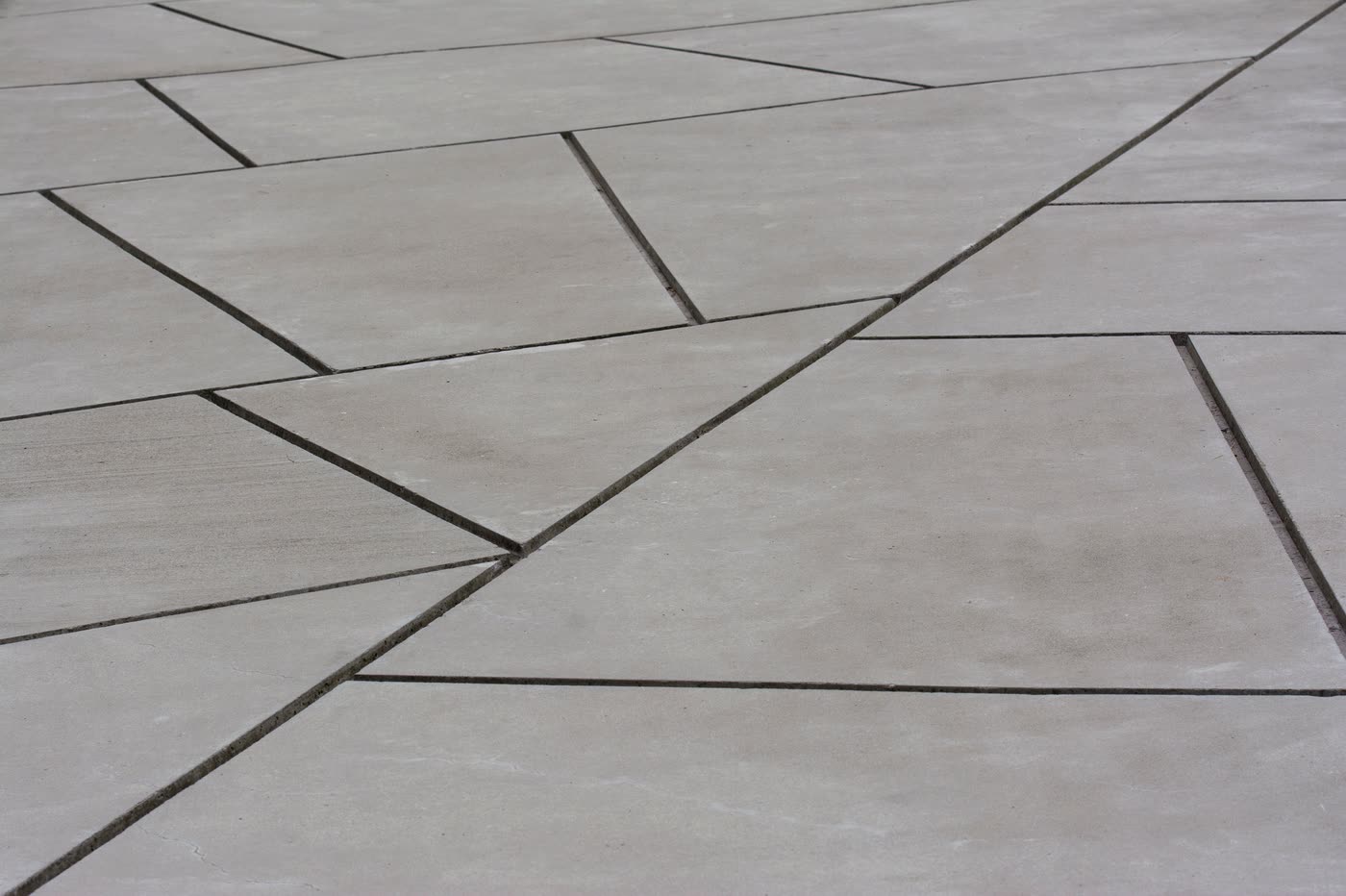
Imprinted concrete driveway cost usually lands between block paving and resin, which is exactly where it sits on most other measures too. My team and I lay it, we are happy to lay it, and we will still ask you one question before you commit: what do you want to happen when a service trench has to go across it. That answer is the real difference between this and block paving.
What imprinted concrete driveway cost includes
Pattern imprinted concrete is a single slab of reinforced concrete, coloured through and then stamped with a texture mat while it is still green, then sealed. It is one continuous pour, which is why it goes down fast and why it behaves nothing like a jointed surface afterwards.
The price covers the same groundwork as any other drive, excavation, spoil away, a compacted sub-base, plus the concrete itself, the reinforcement, the colour hardener and release agent, the imprinting labour while the pour is workable, and the first seal coat. That imprinting window is short, which is why this surface needs more people on site for a day than laying blocks does, and why a wet forecast moves the job rather than the crew working through it.
| Imprinted concrete | Block paving | |
|---|---|---|
| From bare ground | £70–£120 per m² | £80–£140 per m² |
| Time on site | 2–3 days | 3–5 days |
| Resealing | Every 3–5 years | Optional |
| Localised repair | Visible, always | Lift and relay invisibly |
| Permeable by default | No | Available |
Those are indicative regional ranges rather than a quote. The variables that move them are the same ones that move every driveway price: how much has to come out, what the ground turns out to be, and whether access allows a mixer anywhere near the pour. A full breakdown of those sits in the driveway cost guide.
The resealing is not optional
The seal carries the colour and the surface protection. It wears, and on a drive that gets sun and traffic it wears unevenly. Left too long the colour goes flat and patchy, and by then a reseal will not bring it back. Budget for it every three to five years, and treat anyone who tells you it is maintenance free as someone who has not looked at an eight year old one.
Done on time it is a straightforward job and the drive looks close to new afterwards. Skipped twice, it becomes a cleaning and recoating exercise with a much less certain outcome.
The repair problem, stated plainly
A continuous slab cannot be taken apart and put back. If a water main needs digging up, if a car park of a job cracks along a line the reinforcement did not cover, or if you later want an extra bay or a charge point trench, the repair is a saw cut and a new pour. The colour will not match. The pattern will not line up. It will be a visible scar for the life of the drive.
That is not a reason to avoid it. It is a reason to think about what runs under your frontage first. On a plot with no services crossing the drive it rarely matters. On a Victorian terrace with a shared supply, it matters a lot, and block paving or resin is usually the better long term choice.
Cracking, and what actually prevents it
Concrete moves. Every slab this size will develop hairline cracks somewhere, and the job of the design is to decide where. That means proper depth, reinforcement mesh set at the right height in the pour rather than lying on the sub-base, and induced joints cut where movement is expected. Where a drive has cracked badly, it is almost always one of those three that was missed.
Ground preparation carries the rest of it. The sub-base under imprinted concrete does the same work it does under every other surface, and the signs that a base has failed read the same whichever material is sitting on top of it.
Drainage, which is not optional either
A stamped slab is impermeable, so the water has to go somewhere by design rather than by accident. That means falls set during the pour and an outlet that is on your own land, because discharging surface water onto the public highway is what the rules exist to prevent. In practice it is a channel drain across the entrance into a soakaway, and it is priced into the job from the start rather than added when the first heavy rain shows up the problem. The drainage page sets out how that is sized, and the planning permission guide explains why an impermeable surface over five square metres brings the question into scope at all.
Written and reviewed by the PaveLocal team. We build and specify driveways across Northamptonshire, Buckinghamshire and Bedfordshire. Pricing and specification guidance on this page reflects what these jobs cost and involve in this region, not a national average.