Driveway guide
How to stop weeds growing in block paving
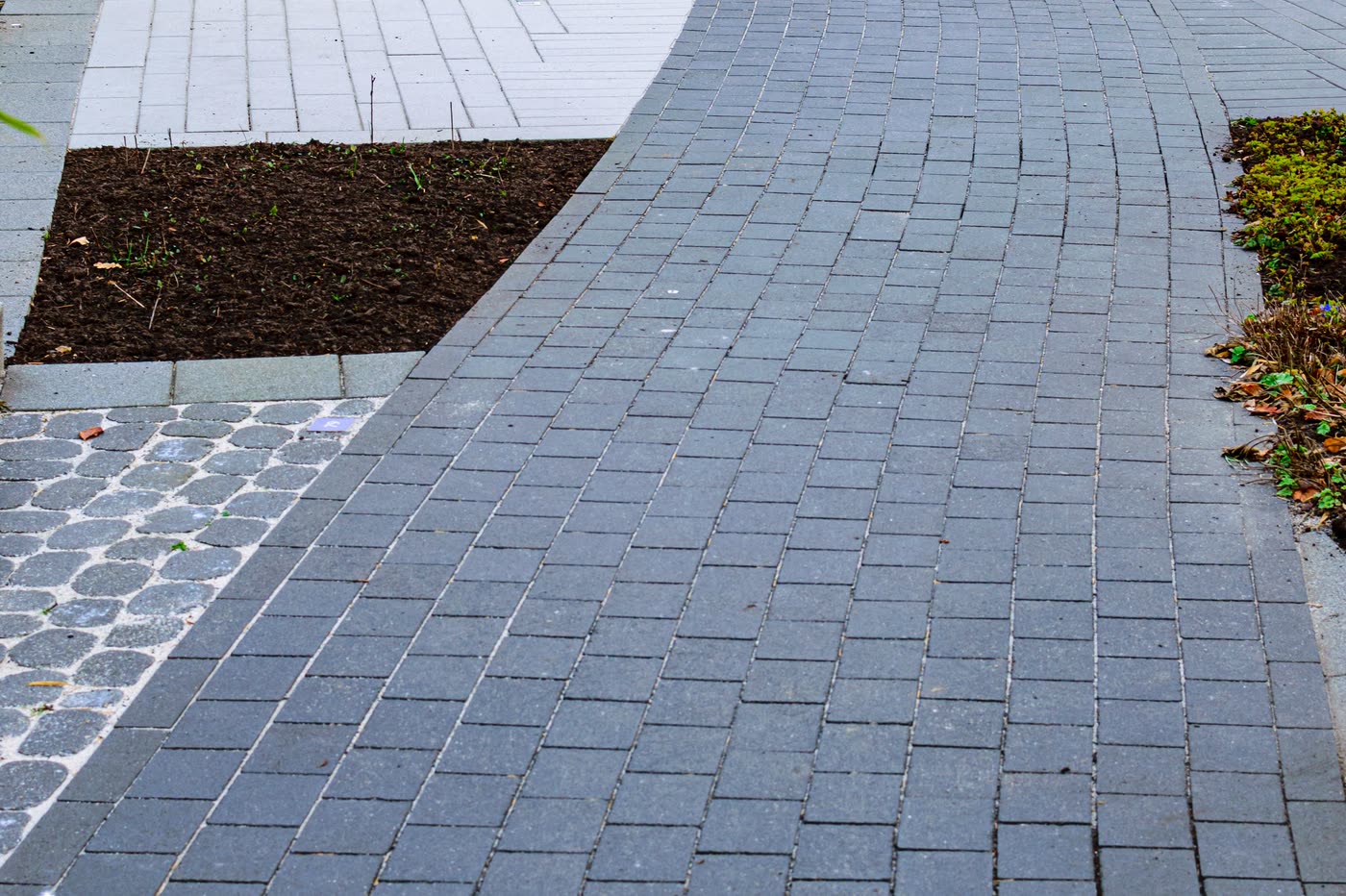
How do you stop weeds growing in block paving?
Keep the joints full of kiln-dried sand. Weeds germinate in windblown dirt collecting in depleted joints, not from the soil underneath, so a full joint leaves nowhere to root. Re-sand annually, remove existing weeds before topping up, and consider a polymeric jointing sand. Salt works but damages planting, concrete and soil, do not use it.
Almost everything written about how to stop weeds in block paving is aimed at killing the weeds that are already there. The useful question is why they arrived, and the answer surprises most people: they did not come up from below. They landed on top, in the jointing sand, which is also why how you clean the drive matters more than which weedkiller you buy.
Where do the weeds actually come from?
A correctly built block driveway has a geotextile membrane and 150–200mm of compacted stone underneath it. Nothing is germinating through that.
What happens instead is that windblown soil, leaf litter and general grime collect in the joints between the blocks. Over a few years that builds up into a thin strip of growing medium running the length of every joint on the drive, and seed lands in it. The weeds are rooted in the top 20mm, not in the ground.
It means membrane and weedkiller are both treating the wrong thing. The joint is the problem, and a joint packed with clean kiln-dried sand has no room for dirt to collect and nothing for a seed to root into.
Does salt kill weeds in block paving?
Yes, and you should still not use it. Salt is effective and cheap, which is why it is recommended so often, but on a driveway it does three things you will not want.
- It sterilises the ground it runs into
Run-off reaches borders and lawns at the edge of the drive and stays in the soil for a long time.
- It attacks concrete
Salt accelerates the corrosion of steel reinforcement and contributes to surface scaling on concrete edging and kerbs.
- It comes back
It kills the top growth without addressing the joint, so the same weeds return next season into the same dirt.
Boiling water is the better cheap option for spot treatment, it kills the plant, costs nothing and leaves no residue in the soil.
What is the right maintenance routine?
The routine is the same whatever the drive is laid in, and it is the one thing that keeps block paving looking new for twenty years instead of five.
- Once a year, remove and re-sand
Pull or burn off existing growth, brush the joints out, then brush in fresh kiln-dried sand in several passes until they stop taking it. This is the whole job.
- Do it after any wash
Cleaning strips jointing sand out. Re-sanding afterwards is not optional, blocks without joint sand lose interlock and start to rut.
- Consider polymeric sand
Jointing sand with a binder that sets slightly when wetted. It resists washout and weed growth far better than plain kiln-dried sand, costs more, and is harder to remove if blocks ever need lifting.
- Check where water stands
Persistent growth in one patch usually means water sits there. That is a drainage question, not a weed question, see driveway drainage.
Should you seal block paving to stop weeds?
Sealing helps, but it is not primarily a weed treatment. A sealer stabilises the jointing sand and reduces the dirt that collects, so weed growth slows. It also deepens the colour and makes spills easier to lift.
It needs redoing every few years, and a poor application leaves a patchy sheen that is difficult to correct. Plenty of well-maintained drives are never sealed. If you are choosing between sealing and simply re-sanding annually, the re-sanding does more for the structure of the drive.
When are weeds a sign of something worse?
Weeds on their own are cosmetic. Weeds combined with joints that empty within months of re-sanding usually mean water is running across the surface and washing the sand out, which points at the falls. Weeds plus movement underfoot or rutting in the wheel tracks is a sub-base problem, and no amount of jointing sand fixes that, see signs your driveway needs replacing.
Does re-sanding actually stop them coming back?
Mostly, yes, and it is the step people skip. Kiln-dried sand brushed into dry joints fills the gap that windblown seed lands in, and a full joint gives a seedling nowhere to root. The catch is that it has to be dry, both the sand and the blocks, or it bridges halfway down and leaves a void underneath. Do it on a dry spell, brush it in diagonally across the blocks, and top the joints up a second time a week later once traffic has settled the first fill.
Polymeric or jointing compounds go a step further by setting semi-rigid, and they hold up well on a drive that is otherwise sound. They are not a repair, though. If the blocks move underfoot the compound cracks and you are back where you started, so read the structural signs first, and see driveway repair if anything is rocking.
Written and reviewed by the PaveLocal team. We build and specify driveways across Northamptonshire, Buckinghamshire and Bedfordshire. Pricing and specification guidance on this page reflects what these jobs cost and involve in this region, not a national average.