Driveway guide
Block paving patterns: which bond suits a driveway, and why it matters
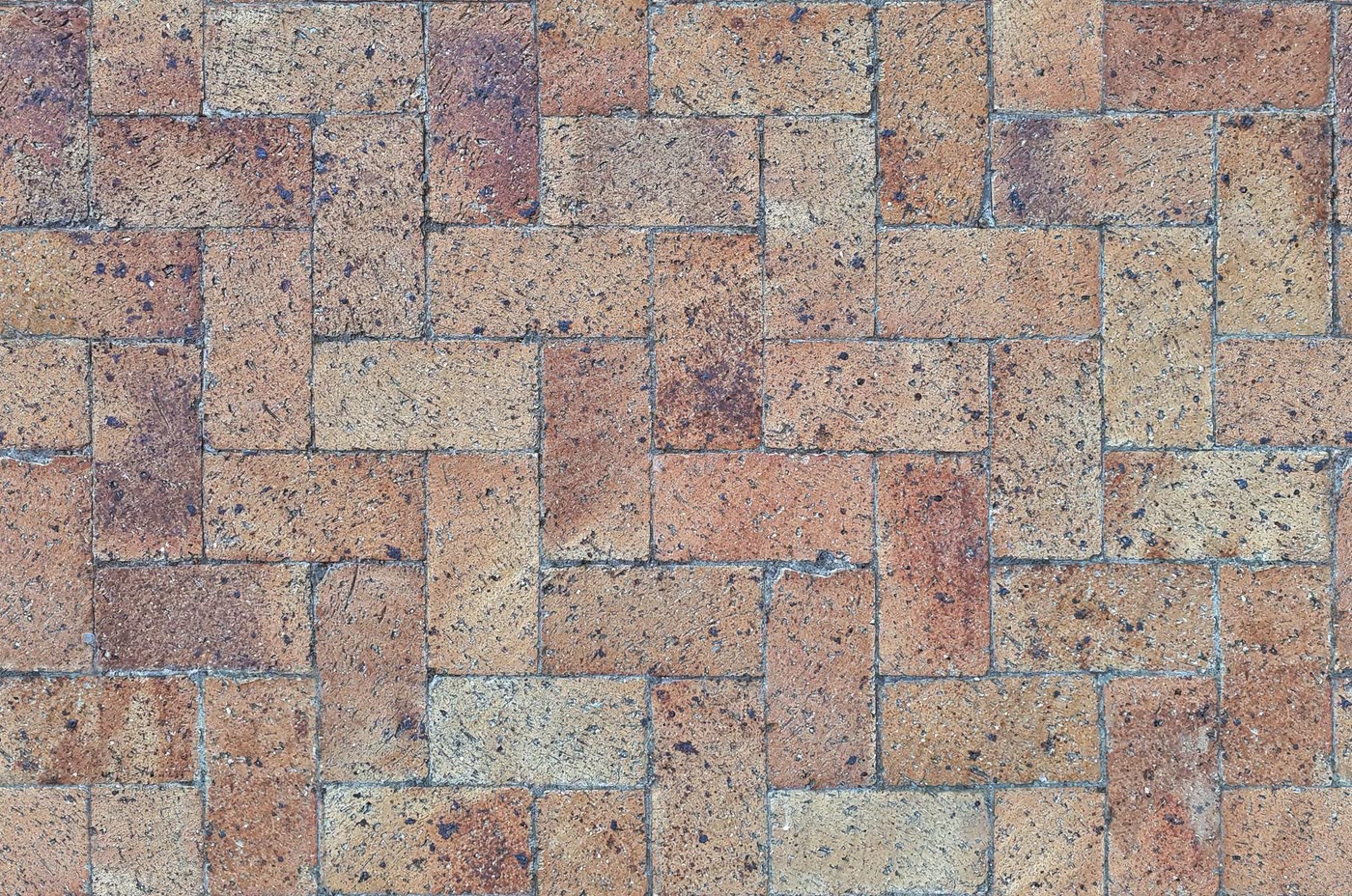
Block paving patterns are usually chosen from a brochure photo, but on a drive the pattern does a structural job as well as a visual one. Cars turn, brake and pull away on the surface, and every one of those movements pushes blocks sideways. Some bonds lock together and resist that push. Others let blocks slide along a line. This guide covers the common block paving patterns, which ones suit a driveway, and where the looks and the engineering pull in different directions. The main block paving page covers the materials and the build under the pattern.
Why the pattern matters on a driveway
A block drive holds together through interlock. Each block is held by its neighbours, the sand in the joints, and the edging around the whole area. When a wheel turns on the surface, it tries to twist and shove the blocks under it. If the joints run in long straight lines in the direction of travel, the blocks can slide along those lines a fraction at a time. Over a few years that shows up as opening joints, blocks creeping towards the edge and ruts where the car turns. A pattern where no joint runs straight for more than a block or two spreads the load and stops that creep. The driveway edging guide explains the other half of the job: holding the whole area in.
Herringbone: the default for a reason
Herringbone lays rectangular blocks in a zigzag, each one at right angles to its neighbour. No joint runs straight for more than one block, so the surface locks together in every direction. That is why it is the usual recommendation for any block paving that takes vehicles, and why most of the drives my team and I lay are herringbone.
- 45 degree herringbone
The pattern is turned diagonally to the edge of the drive. It looks dynamic and hides small level differences well, but every edge block needs cutting, so it takes longer and wastes more blocks.
- 90 degree herringbone
The pattern runs square to the edge. Fewer cuts, slightly less waste, and the same interlock. A good choice on straight drives where the cutting time of a 45 degree layout is not worth it.
Stretcher bond: neat, but choose where
Stretcher bond lays blocks in rows, like bricks in a wall, with each row offset by half a block. It looks tidy and is quick to lay. The weakness is that the long joints between rows run in straight lines. If those lines run in the same direction the car travels, the blocks have a track to slide along. If stretcher bond is used on a drive at all, the rows should run across the direction of travel, not along it, and it suits a straight drive with no turning far better than a forecourt where cars swing round.
Basketweave and parquet patterns
Basketweave sets pairs of blocks side by side, alternating direction, like a woven mat. It has a traditional look that suits older houses and paths. On a drive it is the weakest of the common patterns, because the pairs can move together as a unit. It is better kept for paths, patios and borders, or for small decorative panels set inside a herringbone drive.
Borders, bands and colour
Most drives use a border course, a row of blocks laid along the edge in a contrasting colour or orientation, which frames the pattern and gives the cut blocks something clean to meet. Bands of a second colour across the drive can break up a large area. Keep them simple. A busy mix of colours and patterns looks dated faster than a single colour in a good bond, and every change of pattern adds cutting time, which shows up in the price. The new driveway cost guide covers what moves a quote.
Block paving patterns and the build underneath
No pattern can rescue a drive with a poor base. A well bonded herringbone surface laid on a thin sub-base over clay will still dip where the car sits. The pattern resists sideways movement; the sub-base and the ground underneath resist the downward load. Both have to be right. The guide to laying block paving walks through the full build, and the block paving sand guide covers the jointing that keeps the pattern locked.
What I would choose
For most drives, herringbone at 45 or 90 degrees, a contrasting border, and one main colour. It is the bond that lasts under cars, it suits almost any house, and it ages well. I will lay other patterns where a customer wants them, but on a drive that takes daily traffic I will say plainly if a pattern is likely to cost you a repair later. If you are comparing block paving with other surfaces first, the block paving vs resin guide sets out the trade-offs.
Written and reviewed by the PaveLocal team. We build and specify driveways across Northamptonshire, Buckinghamshire and Bedfordshire. Pricing and specification guidance on this page reflects what these jobs cost and involve in this region, not a national average.