Driveway guide
Concrete driveway cost, and where plain concrete beats block paving
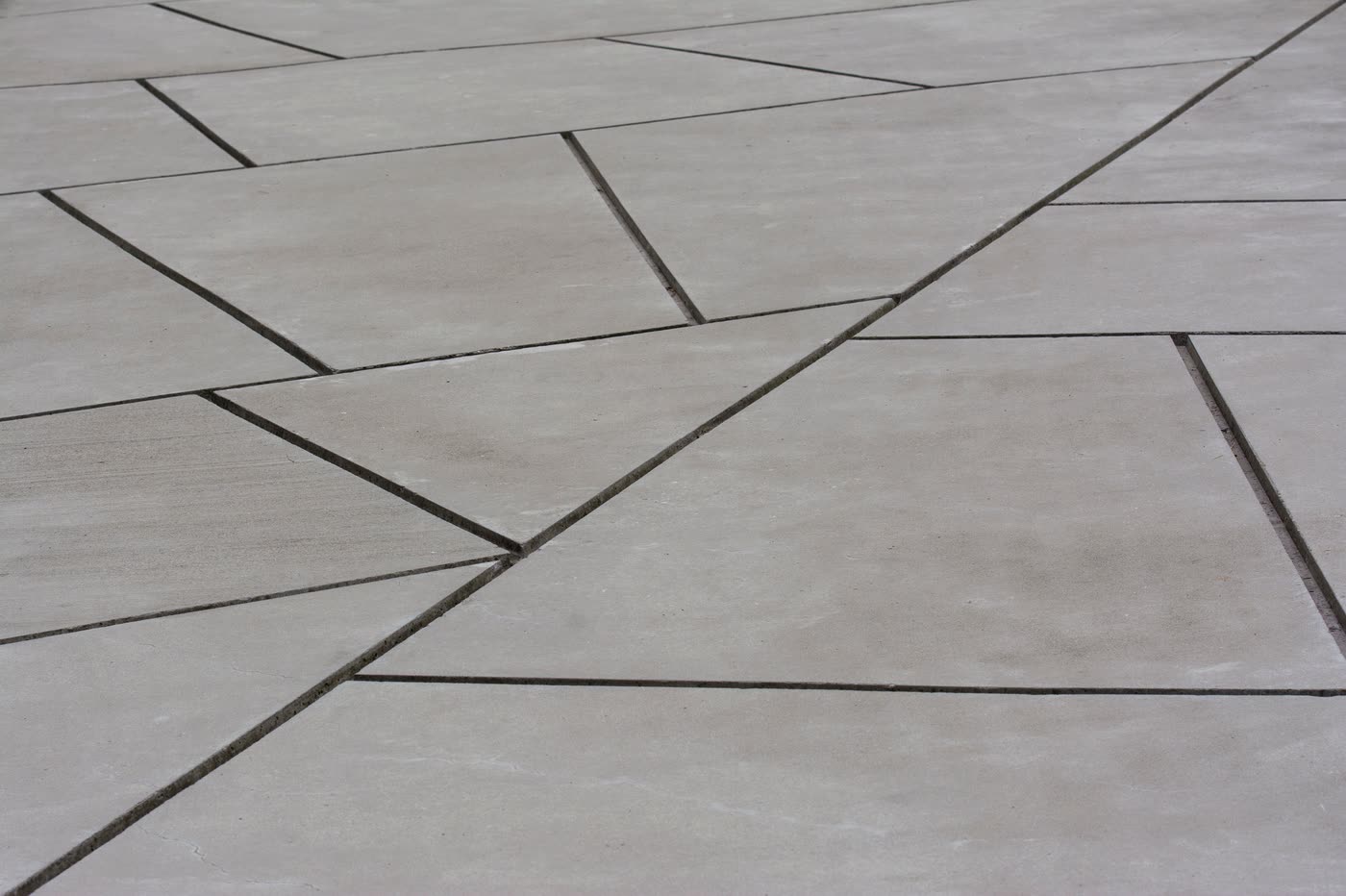
Concrete driveway cost is lower than most people expect. A plain brushed slab is one of the cheapest hard surfaces you can put on a drive, often closer to tarmac than to block paving. The catch is not the price on the day. It is what happens when the slab cracks, or a cable has to go across it. This guide covers what plain concrete costs, what a fair quote includes, and the drives where my team and I would point you at something else. If you are weighing it against the stamped version, the imprinted concrete guide covers that separately.
Concrete driveway cost per square metre
Plain concrete means a poured slab with a brushed or broom finish, no colour and no pattern. The figures below are indicative regional ranges for 2026, for a full job including dig-out, sub-base, reinforcement and finish. They are not quotes, and a clay site or a sloping drive can push a job above them.
| Drive | Approx. area | Indicative cost |
|---|---|---|
| Per square metre | 1m² | £55–£90 |
| Single-car frontage | 15m² | £850–£1,350 |
| Typical two-car drive | 40m² | £2,200–£3,600 |
| Large drive | 60m² | £3,300–£5,400 |
Small jobs cost more per square metre, because the mixer lorry, the pump if one is needed and the crew cost much the same for 15m² as for 40m². For how these numbers sit against every other surface, see how much a new driveway costs.
What a fair concrete quote should spell out
Two concrete quotes can be hundreds of pounds apart and both be fair, because they describe different slabs. Before you compare totals, check each one states:
- Excavation and disposal
How deep they dig and whether taking the spoil away is included. On a clay frontage this is a real cost.
- Sub-base
The type and compacted depth of the stone under the slab. Concrete hides a weak sub-base for a year or two, then cracks over it.
- Slab thickness and reinforcement
The thickness of the concrete and whether steel mesh goes in. If neither is written down, ask.
- Joints
Where the movement joints go. Concrete shrinks and moves, and the cut joints decide where it cracks. A big slab with none will choose for itself.
- Drainage
Where the water goes. More on this below, because it is the line most often missing.
- Edges and finish
Any edging, and whether the finish is brushed, power floated or exposed aggregate.
The same checklist logic applies to any drive. The driveway installation page sets out the stages my team and I price for.
The drainage line most concrete quotes leave out
Plain concrete is impermeable. In England, laying more than five square metres of impermeable surface in a front garden needs planning permission unless the rainwater runs to a permeable area or a soakaway within your boundary. So a concrete drive across the front of a house needs a plan for its water: a fall to a border, a gravel strip, or a channel drain to a soakaway. The drainage rules guide explains what counts. If a quote just says the slab will fall towards the road, that water is going onto the pavement.
Concrete vs block paving: where each one wins
Against block paving, plain concrete is usually cheaper per square metre and quicker to lay, because one pour covers the drive in a day. There are no joints for weeds, and nothing to re-sand. That is the case for it.
The case against is repairs. Block paving can be lifted and relaid over a trench or a sunken patch, and you would struggle to find the join. A concrete slab has to be cut and patched, and the patch never matches. Cracks are the other issue. Even a well built slab can crack, and while the cut joints keep most cracks where you expect them, a crack that wanders across the middle is there for good. The driveway repair guide covers what patching costs on each surface.
- Plain concrete makes sense
Side drives, rear parking, paths to a garage, rural tracks, and any drive where cost and low maintenance matter more than looks.
- Block paving or resin makes more sense
A front drive that is the first thing anyone sees, a drive with services under it that may need digging up, or a house you might sell where the frontage matters.
Finishes, and what they add
A brushed finish is the standard, because it gives grip in the wet. Exposed aggregate, where the top is washed off to show the stones, looks better and costs more. Coloured or stamped concrete is a different product, and the pattern imprinted concrete page covers it. Plain concrete wants little looking after beyond a wash, as the driveway maintenance guide sets out.
Getting it priced properly
Measure the area roughly, note where the water runs in heavy rain, and ask every contractor to price the same spec in writing: dig depth, sub-base, slab thickness, mesh, joints and drainage. Then the totals mean something. If you are in MK and want plain concrete priced alongside block paving or tarmac, my team and I can quote all three for the same drive.
Written and reviewed by the PaveLocal team. We build and specify driveways across Northamptonshire, Buckinghamshire and Bedfordshire. Pricing and specification guidance on this page reflects what these jobs cost and involve in this region, not a national average.